While Western floral arrangements often focus on a profusion of blossoms and symmetry, the Japanese art of Ikebana (also known as Kado, or “The Way of Flowers”) finds power in restraint. It is a philosophy that views the flower not as an object of decoration, but as a living entity. In the quiet space of a studio, the practitioner engages in a silent dialogue with the stems, leaves, and branches, seeking to reveal the inner spirit of the plant.
The foundation of Ikebana is often built upon a symbolic triangle representing Ten (Heaven), Chi (Earth), and Jin (Humanity). This triad reminds us that we are not separate from the natural world, but an integral part of its structure. Like the “mushin” of a Samurai or the precision of a tea master, every snip of the shears is a deliberate act of clarity, stripping away the excess to highlight the essential line.
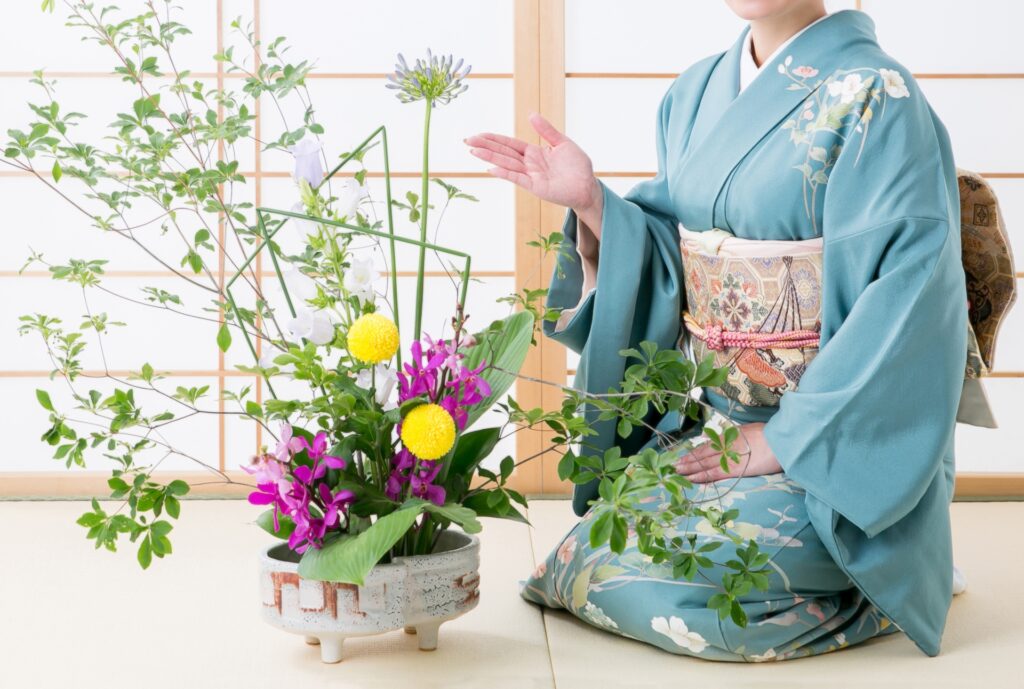
In Ikebana, what is left out is just as important as what is put in. This art form celebrates the “asymmetry” and “negative space” that define the Zen aesthetic.
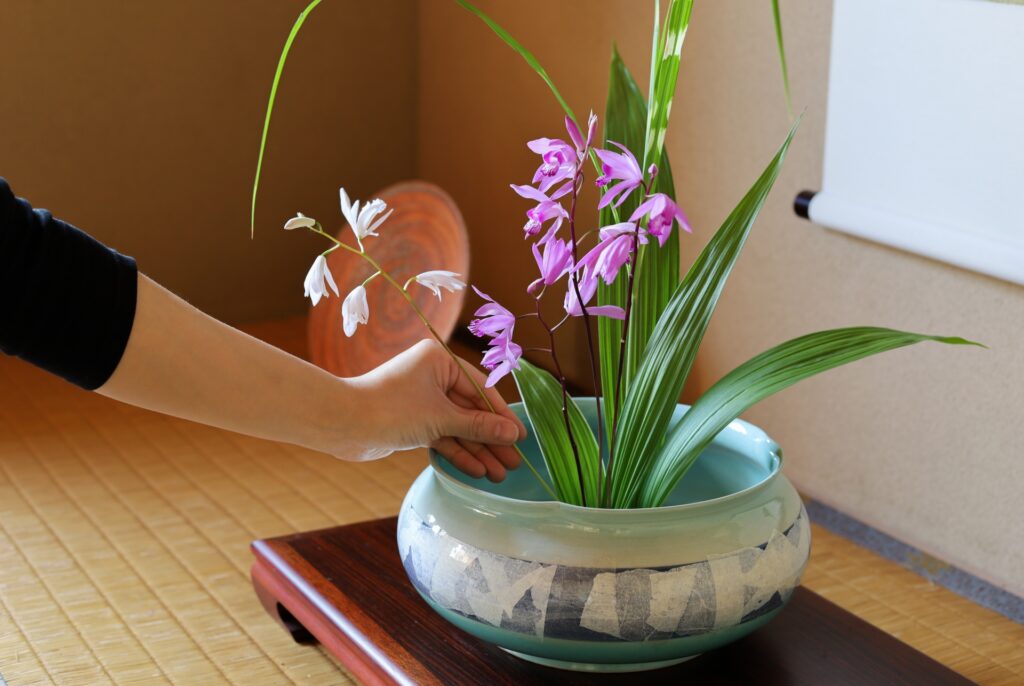
In our modern life of constant distraction, Ikebana serves as a “One Task” ritual. It requires the practitioner to slow down and observe the subtle curves of a branch or the way a petal catches the light. This process is a radical departure from the digital world—it is an exercise in “beginner’s mind,” where one approaches each flower with fresh eyes and no preconceived notions.
The goal is not to create a permanent masterpiece, for the flowers will eventually fade. Instead, the true art lies in the moment of creation—a sacred interval where the human spirit aligns with the natural world, finding peace in the simple act of “being.”