
The word “Omotenashi” has traveled far beyond the borders of Japan, often translated simply as “hospitality.” But just as Zen is more than just silence, Omotenashi is far more than polite service or a bowing gesture.
It is a philosophy of selflessness—a way of “seeing” the needs of others before they are even spoken.
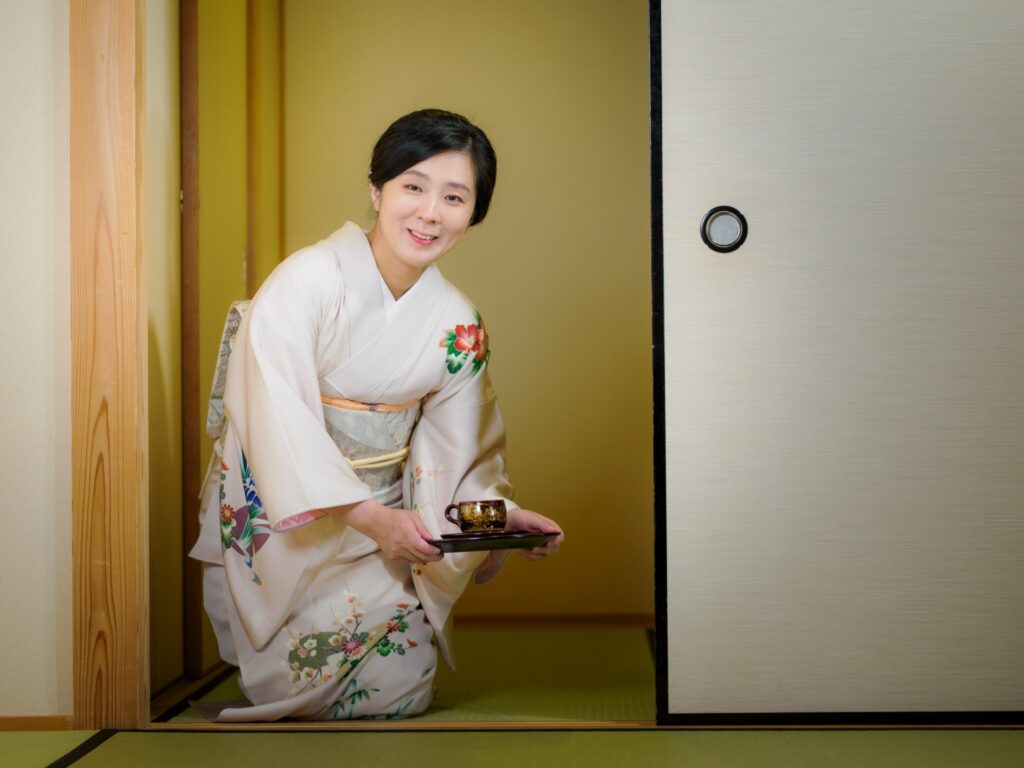
In our modern world, “service” is often a transaction; it is a task performed in exchange for a price, governed by manuals and expectations. Omotenashi, however, translates to “to entertain guests wholeheartedly.” The word is rooted in the concept of ura-omote nashi—to have no “front” or “back.” It represents a state of complete transparency and honesty, where the host acts without a hidden agenda or the expectation of a tip.
This lack of “self” mirrors the Zen concept of mushin (no-mind). The host does not perform; they simply exist in a state of total readiness for the guest’s comfort.
Deeply intertwined with the Zen culture of the Samurai and the tea ceremony, Omotenashi is built on the foundation of Ichigo Ichie—”one time, one meeting.”
In an era of digital chaos and endless notifications, the spirit of Omotenashi offers a radical alternative: the power of deep, undivided attention.
It teaches us that to truly care for someone is to provide “the space for them to find their own” peace. It is not about overwhelming a guest with things, but about stripping away the unnecessary to reveal the essence of human connection.
Ultimately, Omotenashi is not something you “do” as a job. It is a way of seeing the world with a “beginner’s mind”—clear, open, and entirely ready for the present moment.