In the West, a sword is often viewed as a tool of conquest. But in the heart of Japanese culture, the Katana—the “soul of the Samurai”—is a physical manifestation of purity, precision, and sacrifice. To forge a blade is to engage in a ritual of fire and prayer, where the impurities of the iron are hammered out until only the essence remains. The curve of the blade is not merely for utility; it is a balance of opposites. The edge is made of high-carbon steel for lethal sharpness, while the core remains soft and flexible to absorb the shock of battle. This is the ultimate Zen paradox: to be sharp enough to cut, yet resilient enough not to break.
The Art of Not Drawing
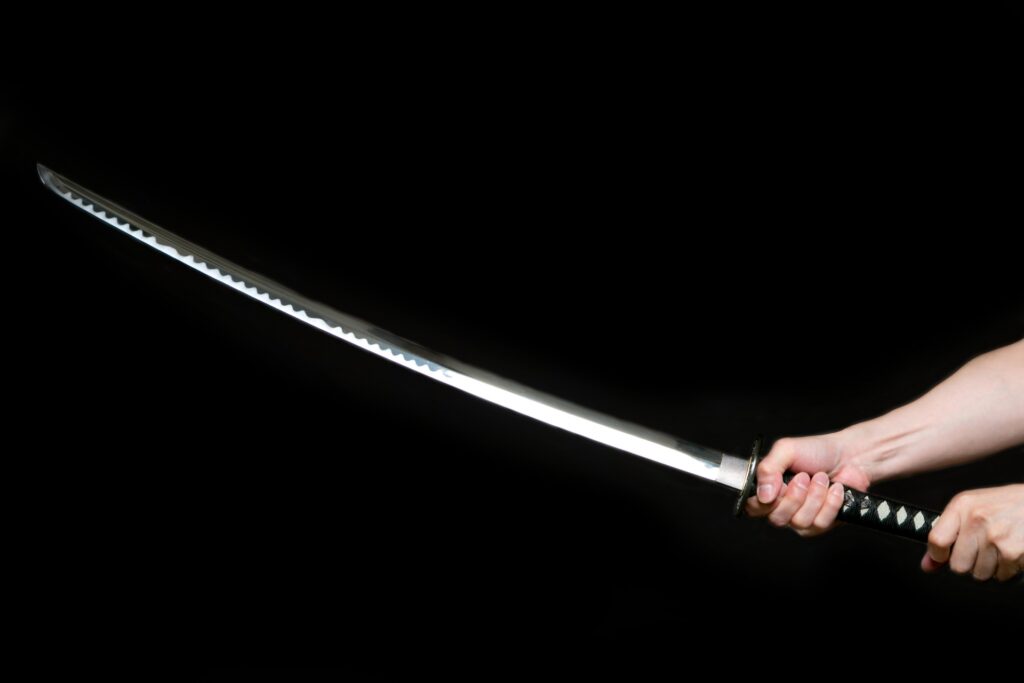
While the Katana is built for the battlefield, its highest philosophy is found in Iaijutsu—the art of drawing the sword. Experts say the greatest victory is the one won without ever unsheathing the blade. This “stillness in motion” mirrors the Zen concept of Mushin (no-mind). A master swordsman does not think about the strike; they become the strike. The sword becomes an extension of the nervous system, a bridge between the physical world and the spiritual void. In this state, there is no “self” and no “enemy”—only the movement of the universe.
Perfection in the Flaw
If you look closely at a masterwork blade, you will see the Hamon—the cloudy, wave-like pattern along the edge. This is the “birthmark” of the sword, created during the cooling process. No two patterns are ever identical. This reminds us of Wabi-sabi: the beauty of things imperfect, impermanent, and incomplete. Even in a weapon designed for absolute lethality, there is a quiet, natural elegance that reminds the holder of the fragility of life.