
More than a meal, Kaiseki is a choreographed ritual of gratitude and the changing seasons.
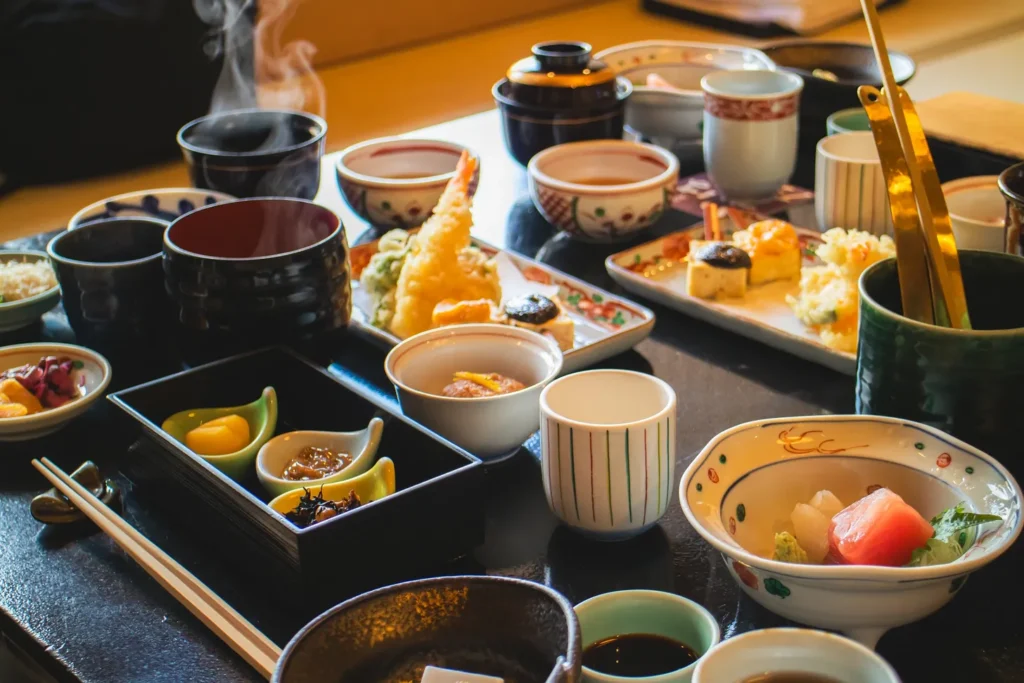
To the uninitiated, a Kaiseki dinner might look like a parade of small, beautiful plates. But to see it only as a “tasting menu” is to miss its soul. Kaiseki is the culinary peak of Japanese hospitality—a high-sensory meditation that translates the fleeting beauty of nature into something you can taste, smell, and touch.
Born from the Zen Tea Ceremony
The roots of Kaiseki are humble, originating from the minimalist meals served during the 16th-century tea ceremony (Cha-kaiseki). The word “Kaiseki” literally refers to a “stone in the bosom”—warmed stones that Zen monks would tuck into their robes to stave off hunger during meditation.
This spirit of “just enough” remains. Unlike a Western feast that seeks to overwhelm with abundance, Kaiseki seeks to satisfy through precision and intention. Every element on the plate—from the shape of the ceramic to the garnish of a single maple leaf—is there to tell you exactly where we are in the flow of the year.
The Five Colors and Five Senses
A Kaiseki master works within a strict framework of “The Rule of Five.” A balanced meal must incorporate five colors (red, yellow, green, black, and white) and five flavors (sweet, sour, salty, bitter, and umami).
But the most important ingredient is Shun (the peak of seasonality). In Kaiseki, a vegetable isn’t just a vegetable. If it is served today, it is because it is at its absolute pinnacle of flavor—at a window of time that may only last a week. By eating Shun, you are literally consuming the essence of the present moment.
The Invisible Connection: Omotenashi
The true magic of Kaiseki lies in the invisible dialogue between the host and the guest. The chef considers the temperature of the room, the speed at which you eat, and even the direction of the wind when choosing the sequence of dishes.
It is a silent performance where the vessel is as important as the food. Often, you will be served on antique lacquerware or hand-pinched pottery that has been in the family for generations. To hold these bowls is to touch history.
Conclusion: A Meal for the Soul
In our modern, fast-paced world, Kaiseki is an invitation to slow down. It challenges us to look closely, to chew slowly, and to find the universe in a single bowl of clear soup. It is not just dinner; it is a reminder that life is fragile, beautiful, and profoundly delicious.