
In a world obsessed with perfection, Japan’s oldest aesthetic teaches us the art of letting go.
We live in a digital age of filters, polished surfaces, and the relentless pursuit of “more.” But beneath this noise lies a centuries-old Japanese philosophy that whispers a different truth: Nothing lasts, nothing is finished, and nothing is perfect.
This is Wabi-Sabi.
It is the beauty found in a cracked teacup mended with gold, the moss growing over a stone lantern, or the way shadows stretch across a weathered wooden floor. It isn’t just a design trend; it is a way of seeing the world with a compassionate eye.

Finding Gold in the Cracks
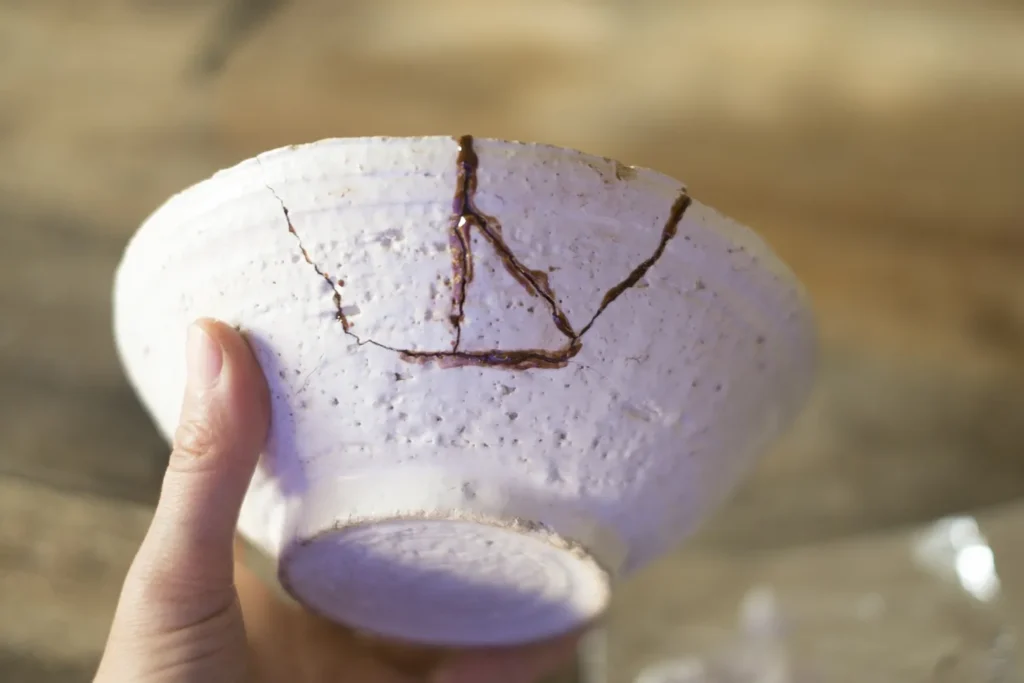
To understand Wabi-Sabi, look at the art of Kintsugi (golden joinery). When a ceramic bowl breaks, Japanese masters don’t throw it away. They repair the cracks with lacquer mixed with powdered gold.
Instead of hiding the damage, they celebrate it. The scars become the most beautiful part of the object, telling a story of resilience and history.
Together, they remind us that our own “cracks”—our failures, our age, and our quirks—are not flaws to be hidden, but marks of character to be embraced.
The Luxury of Less
In the West, “luxury” often means opulence, marble, and shine. In the world of Wabi-Sabi, luxury is a single wildflower in a rustic vase.
This philosophy was refined in the Japanese tea ceremony. Masters moved away from flashy, expensive Chinese porcelain to favor humble, handmade local bowls that felt warm in the hand. They realized that an atmosphere of “refined poverty” allowed the soul to breathe. When we strip away the excess, what remains is the essence.
How to Practice Wabi-Sabi Today
You don’t need a tea room to experience this. Wabi-Sabi is a shift in perspective:
Accept “Good Enough” : Give yourself permission to be human in a world of AI-generated perfection.
Embrace the Weathered : Appreciate the jeans that have faded over years, or the wooden table scarred by family dinners.
Slow Down : Notice the beauty in the changing seasons—the falling leaves are as beautiful as the new buds.
“Wabi-sabi nurtures all that is authentic by acknowledging three simple realities: nothing lasts, nothing is finished, and nothing is perfect.” — Richard Powell