
The tree is not just a plant; it is a universe contained in a shallow bowl.
To a casual observer, a Bonsai is simply a miniature tree. But to the practitioner, it is an exercise in slow rebellion against the rush of modern life. Bonsai is the art of “living sculpture”—a collaborative masterpiece between human patience and the stubborn resilience of nature. It is perhaps the only art form that is never truly finished.
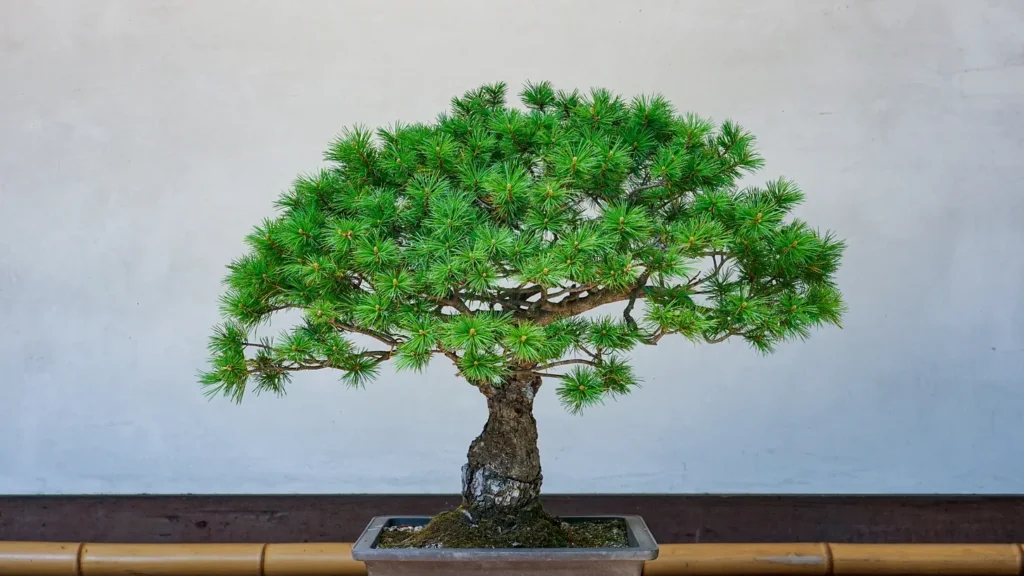
The Geometry of Survival
The beauty of a Bonsai does not come from perfection, but from the appearance of struggle. A prized tree often features Jin (deadwood branches) or Shari (stripped bark), mimicking the scars of a cedar clinging to a windswept cliff.
In Western gardening, we often prune for growth and symmetry. In Bonsai, we prune to reveal the essence of age. By wiring branches and carefully restricting roots, the artist creates a “lie that tells the truth”—a tiny tree that carries the majestic, weary dignity of a thousand-year-old giant. It is a visual representation of Wabi-Sabi: finding beauty in the scarred, the weathered, and the transient.
The Architecture of Empty Space
In Bonsai, what you don’t see is as important as what you do. This is the concept of Ma (negative space). The gaps between the branches are not “empty”; they are the pathways for the wind and the light.
A Bonsai is designed to invite the viewer’s imagination. When you look into the miniature canopy, you are meant to feel the cool shade of a forest or the salt spray of a rugged coastline. The pot itself acts as the earth, and the space around the tree acts as the sky. Within this small container, the entire cosmos is invited to sit on your desk.
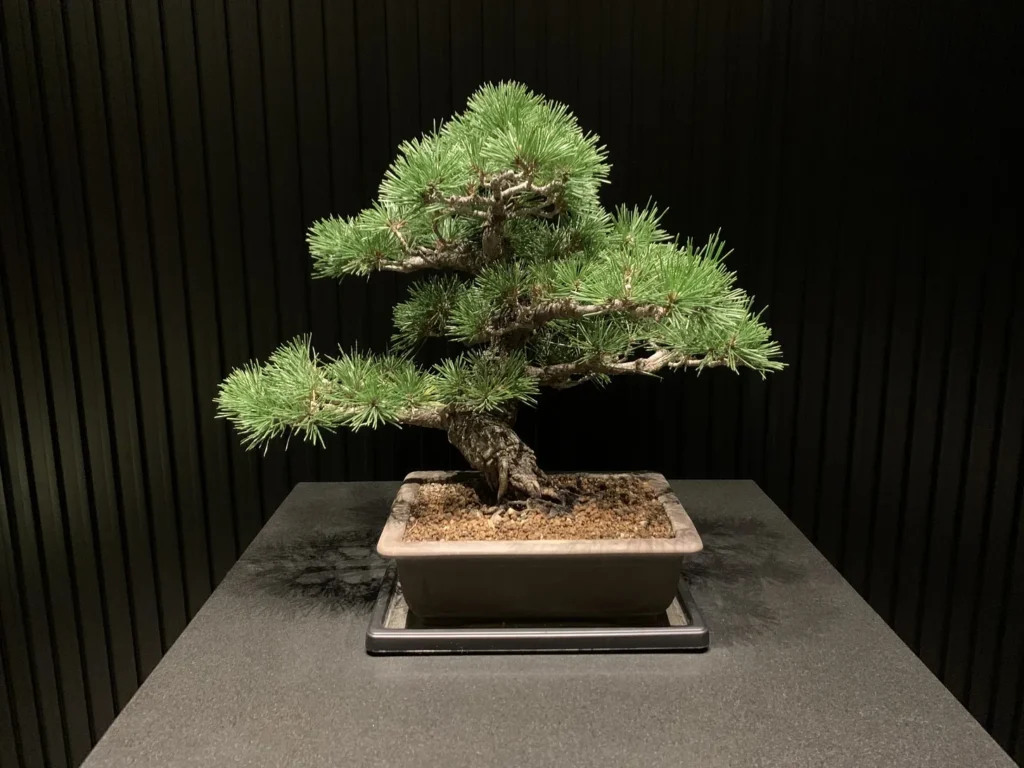
A Dialogue Across Generations
The most profound aspect of Bonsai is its relationship with time. A master may spend fifty years shaping a pine, knowing full well that they are merely a temporary guardian. A great Bonsai is an heirloom, passed from teacher to student, father to daughter, surviving longer than any human life.
To care for a Bonsai is to practice Mindfulness in its purest form. You cannot rush a tree. You must listen to its pace, watering it when it thirsts and pruning it only when it is ready. In return, the tree teaches you the most difficult lesson of all: that greatness is built one day, one branch, and one decade at a time.