
Harvesting the skin of living trees to create architectural poetry that breathes with the forest.
A Living Shell
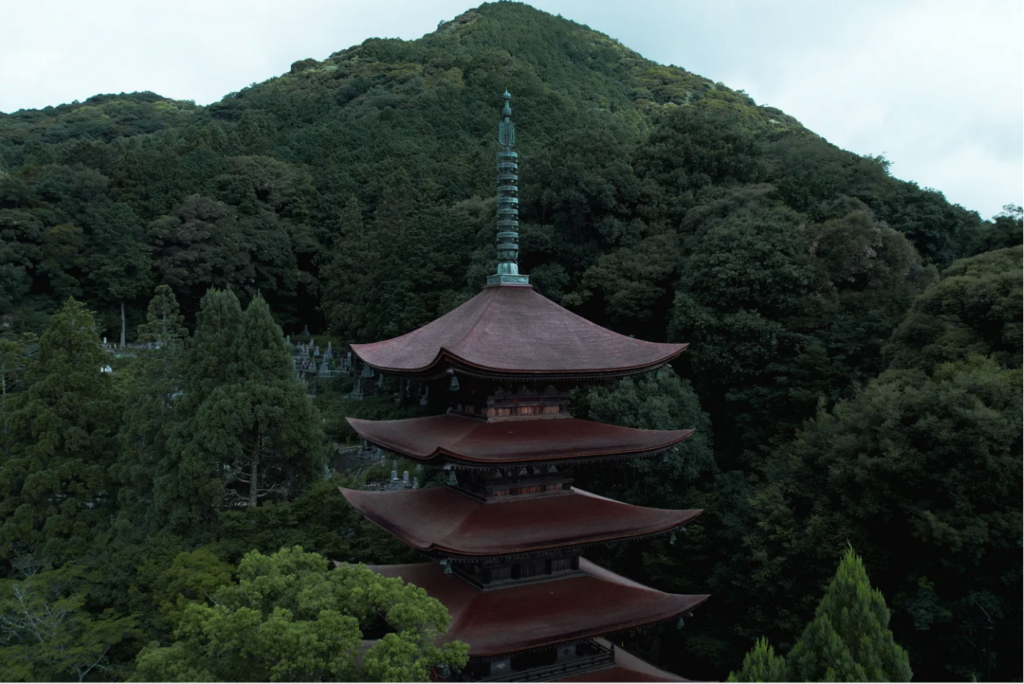
Walk through the ancient shrines of Kyoto, and you’ll notice something extraordinary: roofs that look like the soft, undulating fur of a giant forest spirit. These are Hiwadabuki—roofs made from the thick, fibrous bark of the Hinoki (Japanese cypress) tree.
Unlike tiles or thatch, these roofs are made of thousands of paper-thin layers of bark, hand-peeled from trees that are still standing. It is a 1,200-year-old tradition that represents the pinnacle of Japanese ecological wisdom and aesthetic refinement.
The Tree That Gives Twice
What fascinates the world most about Hiwadabuki is its incredible relationship with nature. In modern construction, we often take from the earth. But the Motokawa (bark harvesting) process is different.
Professional harvesters, known as Motokawashi, climb high into the forest to carefully peel only the outer layer of the cypress bark. They leave the inner layer intact, allowing the tree to continue living. Over the next ten years, the bark grows back, and the cycle begins again. It is perhaps the world’s oldest form of sustainable “upcycling,” where the forest and the temple grow together in harmony.
Precision in a Million Nails
Creating a Hiwadabuki roof is a masterclass in patience. A single roof can require hundreds of thousands of bark strips.
・The Curves : Because bark is flexible, it allows for those iconic, graceful curves seen on Japan’s National Treasures—curves that mimic the natural slopes of the mountains themselves.
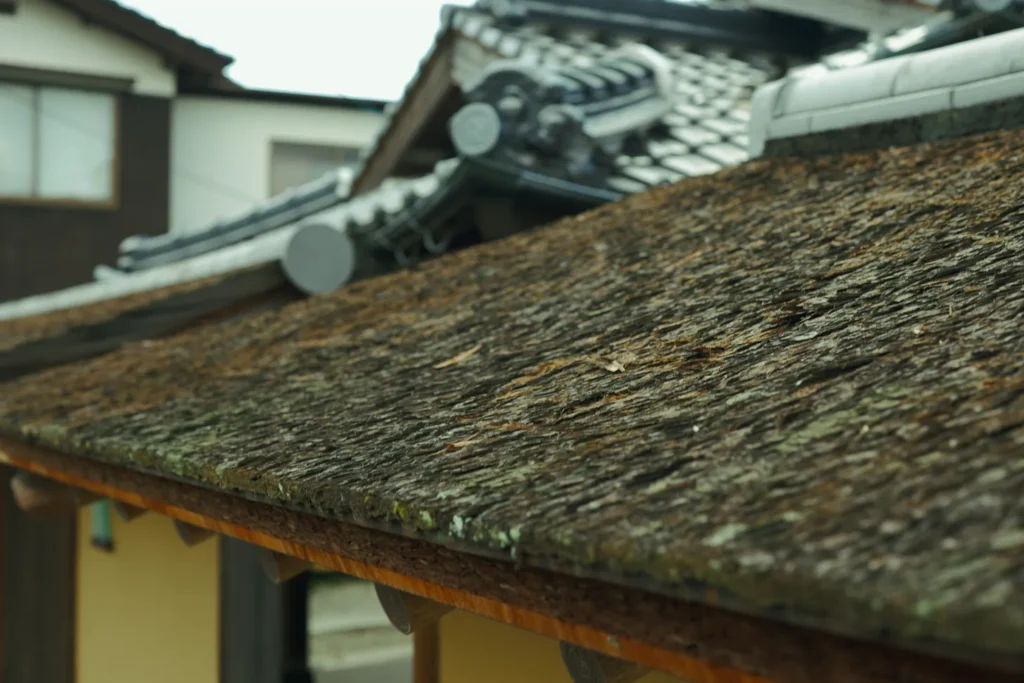
・The Technique : Each strip is layered just millimeters apart, held in place by bamboo nails.
・The Texture : The result is a thick, velvet-like surface that absorbs rain and muffles sound, creating a silence that feels sacred.
The Aesthetic of the Impermanent
A Hiwadabuki roof lasts about 30 to 40 years. To some, this might seem inefficient. But to the Japanese, this cycle of renewal is essential. It is a physical manifestation of Wabi-Sabi: acknowledging that beauty is fleeting and requires our constant care and connection.
When you stand under a Hinoki roof, you aren’t just standing under a building; you are standing under a piece of the forest, woven by human hands, destined to return to the earth one day.