
The art of stopping time.
Beyond “Freshness”: The Science of Umami
In the West, “fresh” usually means “caught recently.” In Japan, freshness is a controlled biological process. When a fish is stressed or dies slowly, it consumes its energy stores (ATP), which leads to the buildup of lactic acid and a rapid decline in flavor.
Shinkeijime involves instantly destroying the hindbrain and the spinal cord with a thin wire. By “turning off” the nervous system, the fish’s muscles don’t realize it has died. This prevents the ATP from depleting, allowing the fish to develop deep Umami over several days of aging, rather than rotting.
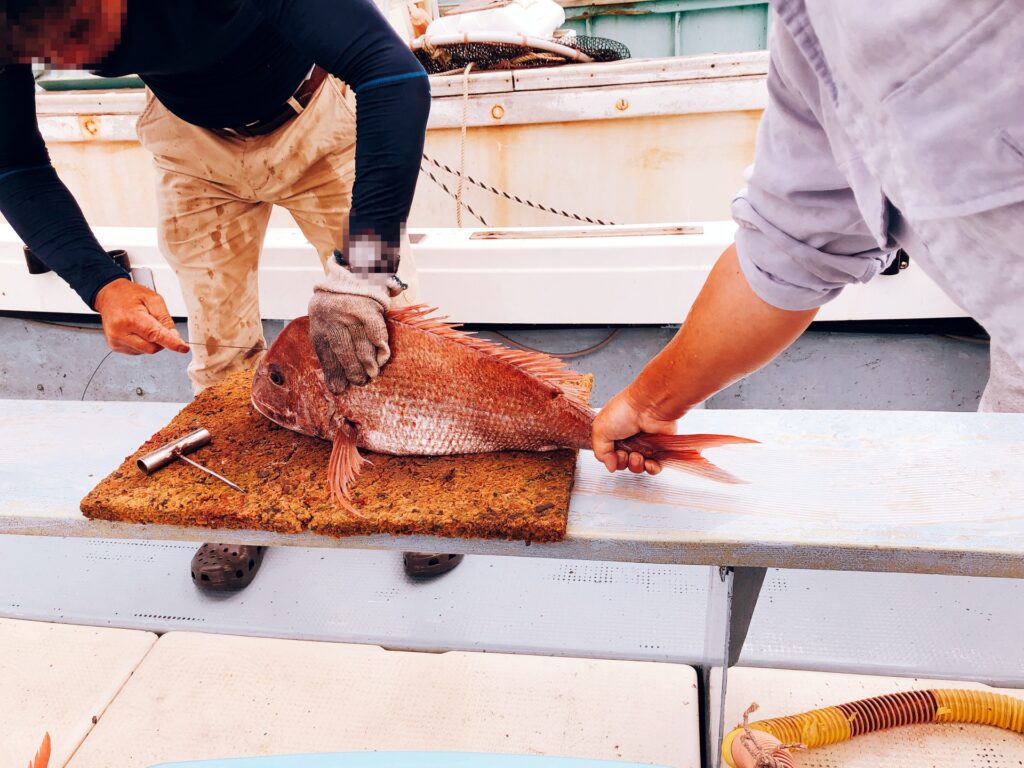
A Ritual of Respect
There is something deeply Japanese about Shinkeijime. It is a swift, precise, and humane method. By ending the fish’s life in a fraction of a second, the fisherman honors the creature by ensuring it doesn’t suffer, while simultaneously preserving its highest possible quality for the diner. It is the intersection of compassion and culinary excellence.
From Local Harbors to Global Kitchens
Once a guarded secret of elite Japanese fishermen, Shinkeijime is now becoming a global standard for Michelin-starred chefs. From New York to Paris, “Ike-Jime” and “Shinkeijime” certified seafood is the gold standard. It’s no longer just about the catch; it’s about the craftsmanship that happens the moment the fish leaves the water.
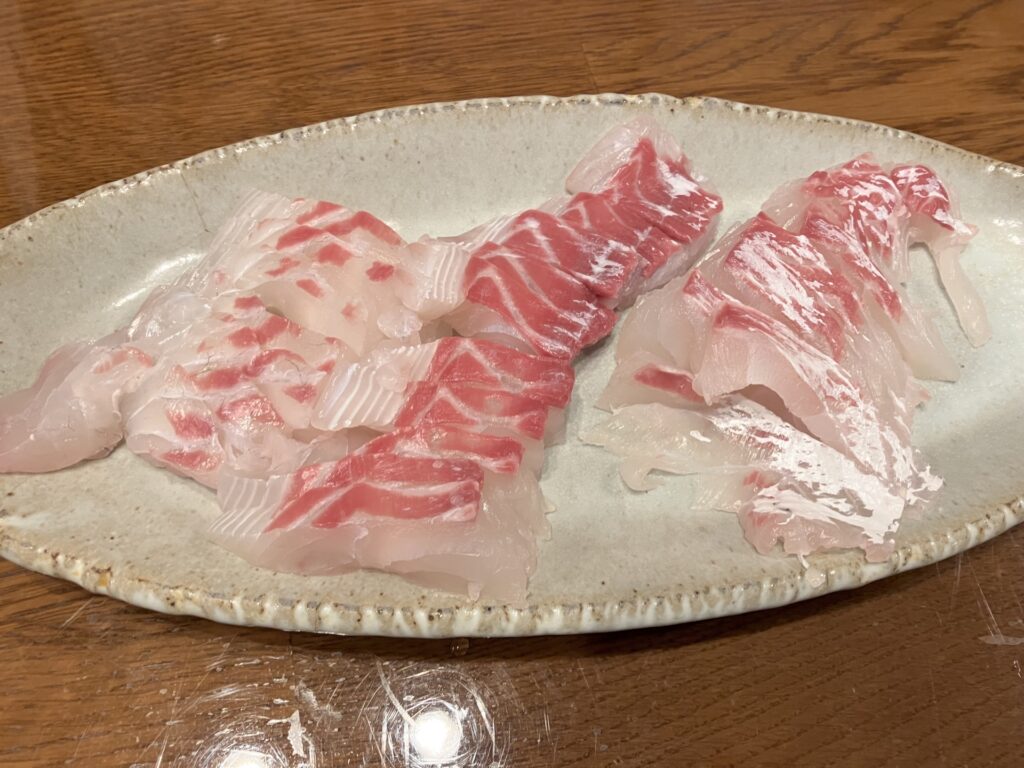
Next time you enjoy a buttery slice of Hamachi or a firm piece of Tai, ask your chef: “Is this Shinkeijime?” You aren’t just asking about the fish; you’re asking about a centuries-old tradition that treats food as an art form.