
Discovering the ancient purification and the spiritual elegance of Japan’s Festival of Dolls.
March 3rd marks Hinamatsuri, often translated as “Girls’ Day.” While the modern celebration is a vibrant display of ornate dolls and peach blossoms, its origins delve deep into the ancient Japanese psyche, where the boundary between the physical and spiritual worlds was considered remarkably thin.
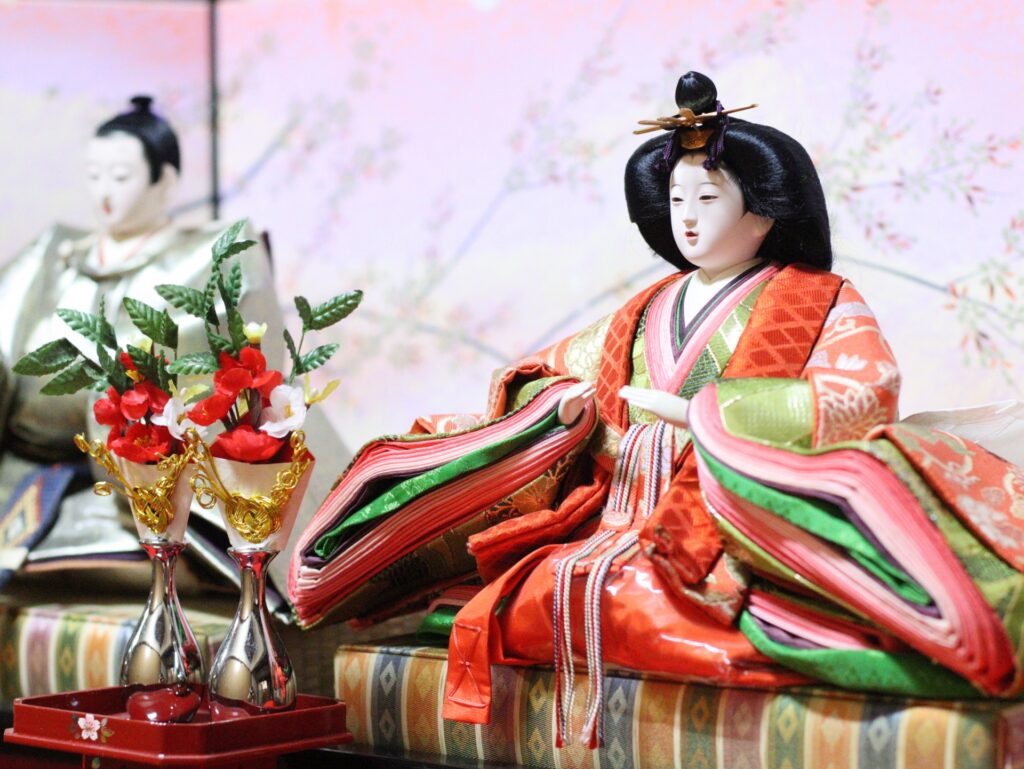
The Origin: Nagashi-hina
Long before the elaborate tiered stands seen today, Hinamatsuri began as a ritual of purification known as Joshi no Sekku. In the Heian period (794–1185), people practiced Nagashi-hina, a ceremony where straw or paper dolls were cast into rivers.
The philosophy was simple yet profound: the dolls acted as “scapegoats,” absorbing the ill fortune, sickness, and “impurities” of the person. By letting the doll float away to the sea, one’s soul was symbolically cleansed for the coming spring. It was a ritual of letting go—an act of surrendering human fragility to the flow of nature.
The Architecture of the Hina-dan
As centuries passed, these simple talismans evolved into the Hina-ningyo (Hina dolls) we recognize today. The transition from “floating” to “displaying” shifted the ritual from a momentary cleansing to a symbolic representation of the Imperial Court.
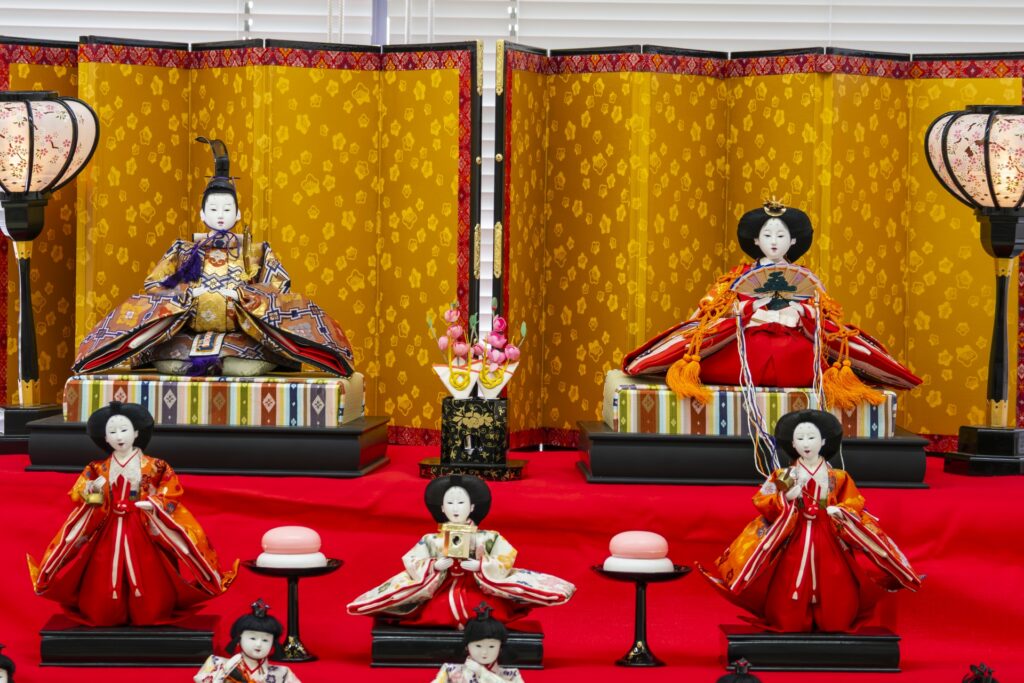
The Hina-dan (the tiered platform) is more than a decoration; it is a microcosm of a sacred social order:
・The Five Musicians: Bringing the “voice” of the celebration through ancient melodies.
・The Emperor and Empress: Representing the pinnacle of harmony and the ideal union.
・The Three Court Ladies: Symbols of service and grace.
A Lesson in Impermanence
Perhaps the most intriguing cultural nuance for an international observer is the strict timeline of the festival. There is a long-standing superstition that if the dolls are not packed away immediately after March 3rd, the daughter of the house will marry late.
Beyond the superstition lies a quintessential Japanese aesthetic: Mono no aware—the pathos of things. The beauty of the Hina dolls is heightened by their temporary presence. Like the cherry blossoms that follow, their value is found in their transience. To keep them out too long is to cling to the past; to put them away is to move forward with a renewed spirit.
Hinamatsuri is not merely a “doll festival.” It is a thousand-year-old dialogue between the hope for a child’s future and the ancient wisdom of spiritual cleansing.