The Mystery of the Upraised Paw
Walk into any Japanese restaurant in New York, a boutique in Paris, or a temple in Tokyo, and you will likely be greeted by a cat with one paw raised. While many Westerners mistake this gesture for a wave “goodbye,” it is actually the traditional Japanese way of beckoning someone to come closer. In a culture where hospitality (omotenashi) is an art form, the Maneki-neko serves as a silent, eternal host, pulling in both customers and good fortune.
Legend of the Lightning Bolt
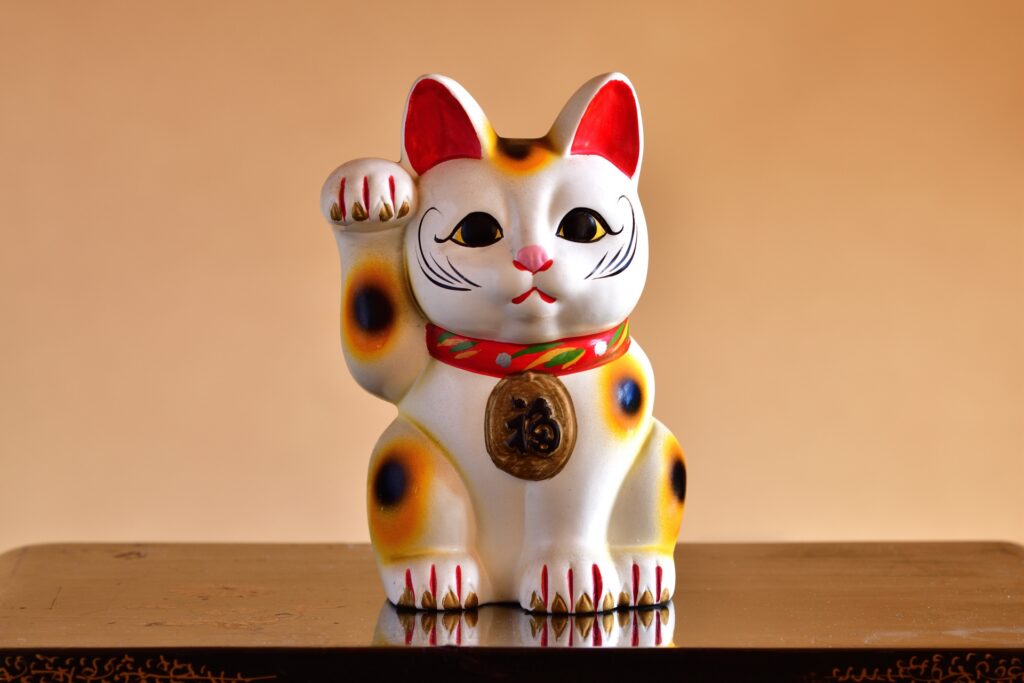
The most famous origin story takes us back to the 17th century at Gotokuji Temple in Tokyo. As the story goes, a wealthy lord was seeking shelter under a tree during a thunderstorm when he saw a priest’s cat beckoning him into the temple. Moments after he moved, lightning struck the very tree where he had been standing. Grateful for his life, the lord became a patron of the temple, and the “Beckoning Cat” became a symbol of protection and serendipity.
The Secret Language of Color and Gesture
Not all Maneki-neko are created equal; their features act as a visual code for the owner’s desires:
A Token of Timeless Charm
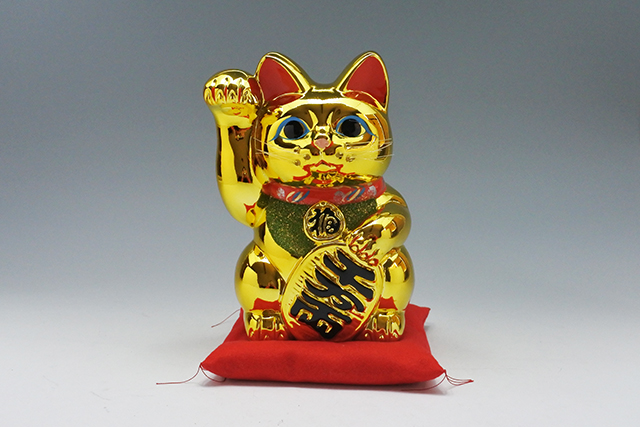
Beyond the superstition, the Maneki-neko represents the unique Japanese ability to blend the sacred with the “kawaii” (cute). It is a bridge between ancient folklore and modern commercial success. Whether it is a tiny plastic version powered by solar cells or a hand-painted ceramic masterpiece, the cat remains a reminder that in Japan, luck isn’t just something you wait for—it’s something you invite in.