A Sanctuary in Ink
In an era defined by the relentless noise of the digital age, a quiet revolution is taking place within the wooden halls of Japan’s temples. It is called Shakyo—the meditative practice of hand-copying Buddhist sutras. While it may appear to be a simple exercise in calligraphy, it is, in reality, a form of “moving meditation.” As the brush meets the paper, the boundary between the self and the external world begins to dissolve, replaced by the rhythmic flow of ink and intention. The scent of the charcoal ink acting as a sensory anchor, pulling the practitioner away from the chaos of the screen and into a realm of tactile presence.
The Geometry of Focus
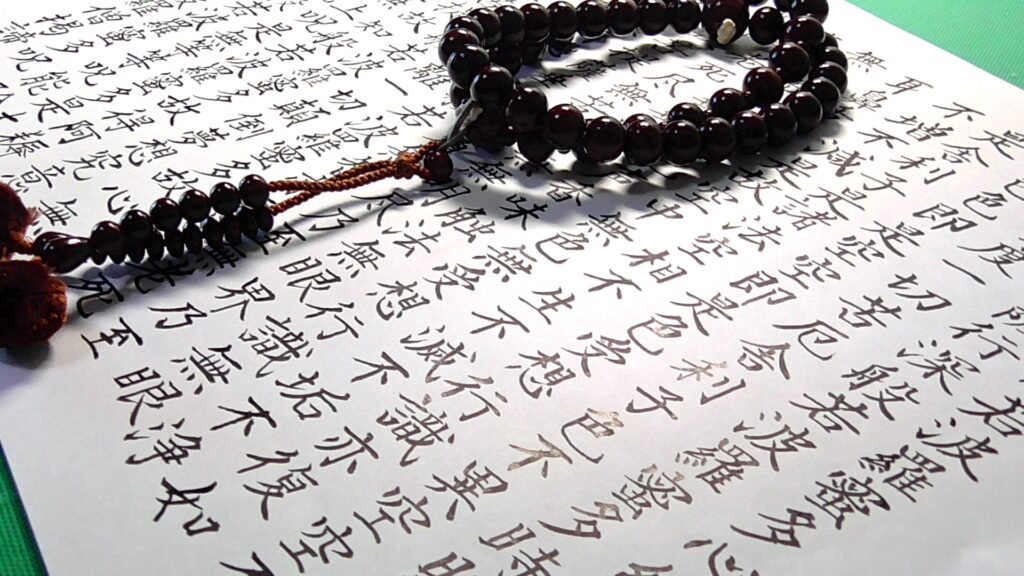
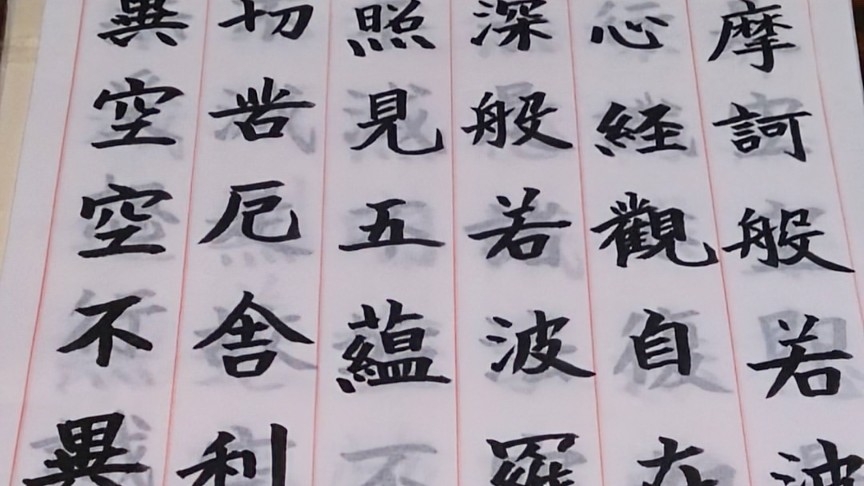
Unlike creative writing, which demands the constant output of new ideas, Shakyo offers the relief of a predetermined path. By tracing the complex kanji characters of the Heart Sutra (Hannya Shingyo), the practitioner surrenders their ego to the geometry of the text. Each stroke—a horizontal line, a sudden curve, a decisive dot—requires absolute presence. There is no room for multi-tasking here. In this sacred repetition, the mind is stripped of its anxieties about the future and its regrets over the past, anchoring the soul firmly in the “now.” It is an act of spiritual architecture, where one builds a temple of focus, one character at a time.
The Mirror of the Inkstone
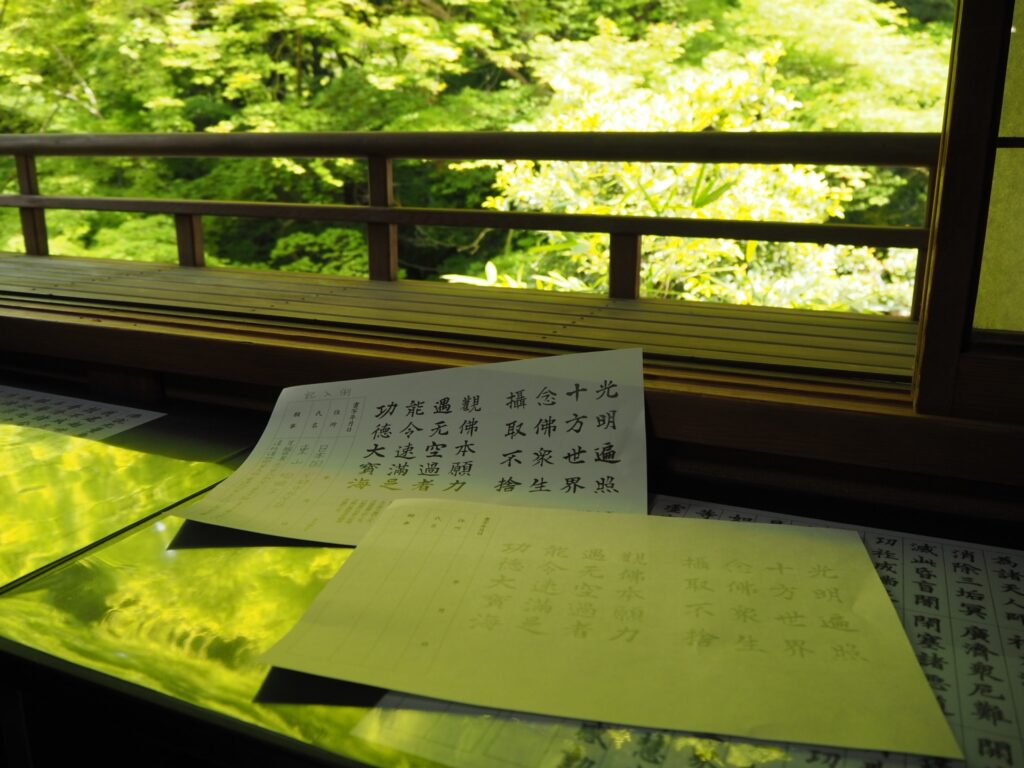
To the uninitiated, the goal of Shakyo might seem to be the creation of a perfect document. However, the true essence lies in the process, not the product. The initial act of grinding the inkstone (suzuri) is a ritual of patience; the darkness of the ink deepens as the mind settles. A trembling line or a smudge is not a “mistake” but a mirror reflecting one’s internal state—a racing heart or a wandering thought manifested in physical form. It is a profound exercise in Wabi-sabi, the beauty of imperfection, teaching that the journey of the spirit is never a straight line, but a series of honest, imperfect marks.
The Elegance of Emptiness
As the final character is brushed and the ink dries, a strange clarity often emerges. The Heart Sutra itself speaks of “emptiness” (Ku), a concept that can be daunting to the Western mind. Yet, through the physical exhaustion of the hand and the intense focus of the eye, this emptiness is felt not as a void, but as a spaciousness—a clearing in the forest of the mind. Shakyo serves as a bridge back to the essential self, providing a sanctuary where the spirit can rest and recalibrate before returning to the vibrating world outside. It is the art of writing oneself back into a state of peace.