
The Threshold of the Unseen
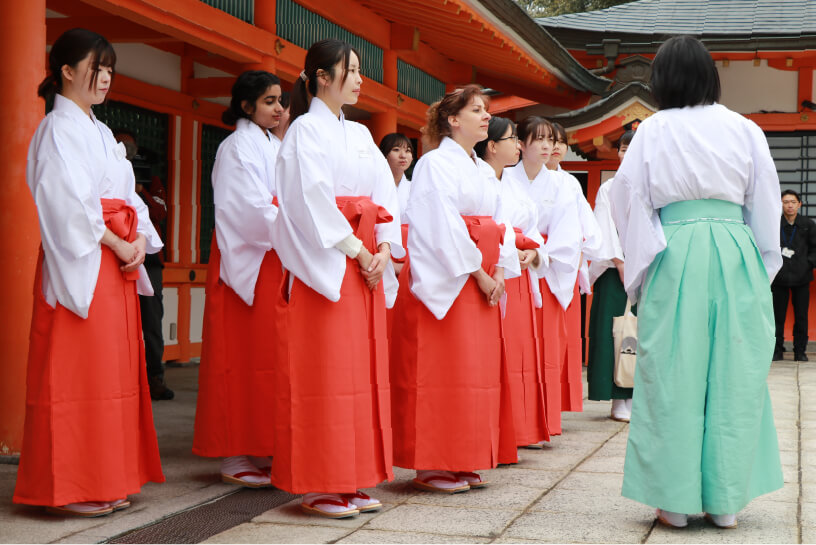
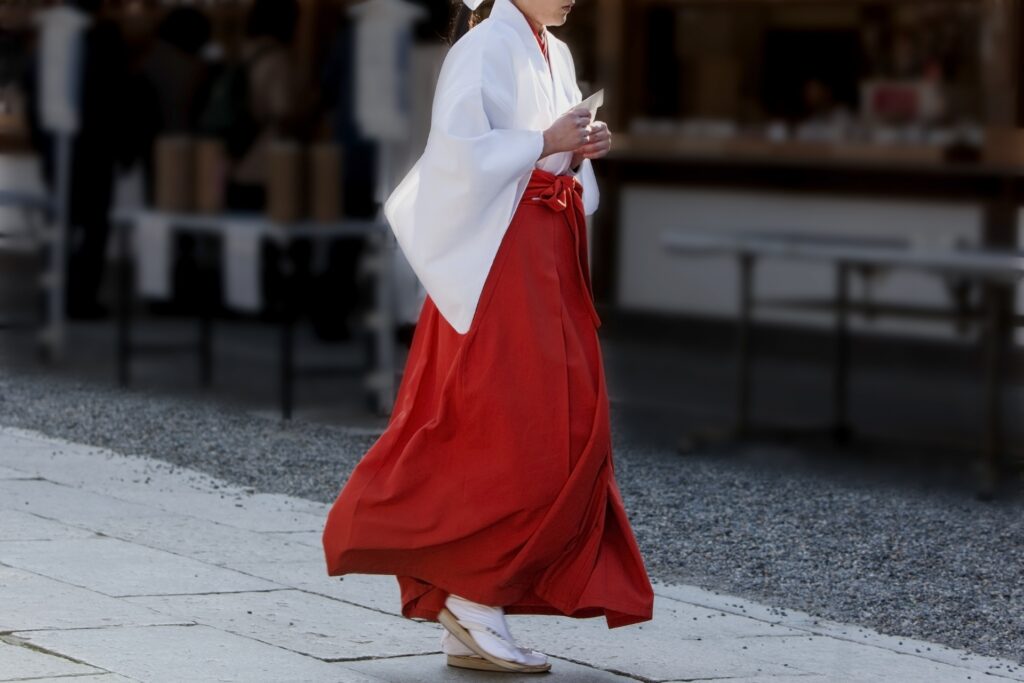
At the edge of Japan’s bustling modern cities lies a boundary marked by vermilion gates and the scent of ancient cedar. Within this sacred perimeter, one encounters the Miko. Dressed in the iconic white kosode and crimson hakama, they move with a grace that seems to slow the passage of time. To the visitor, the Miko is a striking visual of tradition, but her presence signifies something much deeper: she is the keeper of the threshold, the human bridge between the chaotic world of the living and the profound stillness of the Kami (deities).
From Oracle to Anchor
The history of the Miko is a journey through the evolution of spiritual authority. In ancient Japan, they were powerful shamans and oracles, entering trances to convey the will of the gods to emperors and generals. They were the voices of the wind and the soil. Over the centuries, this role transitioned from the ecstatic to the ceremonial. Today, the Miko serves as an anchor of purity. While she no longer enters a trance to predict the future, her meticulous performance of the Kagura—a ritual dance of ancient melodies—serves to harmonize the community and invite the divine into the present moment.
The Aesthetics of Sincerity
There is a specific philosophy found in the Miko’s daily labor, known as Magokoro, or “true heart.” Whether she is meticulously sweeping the stone paths with a bamboo broom or carefully folding paper charms (Omamori), every action is performed as a form of prayer. This is not mere maintenance; it is the cultivation of a space where the sacred can dwell. In a world obsessed with efficiency and speed, the Miko’s deliberate, quiet movements offer a counter-narrative—a reminder that sincerity lies in the details and that the mundane can be transformed into the holy through focused intent.
A Living Continuity
To witness a Miko at a local shrine is to see the survival of a lineage that predates written history. She represents a unique Japanese paradox: a figure who remains unchanged while the world around her undergoes radical transformation. She does not preach or proselytize; she simply exists as a witness to the sacred. In the rustle of her silk sleeves and the steady chime of her bells, one hears the heartbeat of a culture that refuses to let go of its connection to the natural and the divine. She is the silent guardian of the invisible threads that bind the past to the future.