
The Alchemy of Wood and Skin
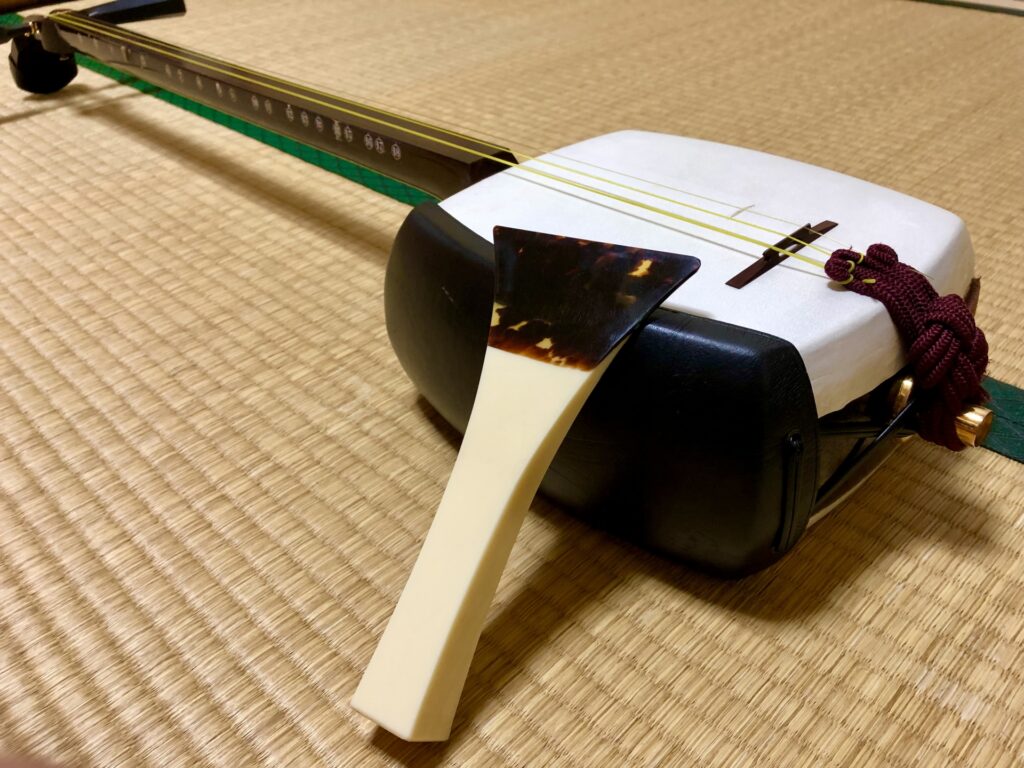
To look upon a Shamisen is to see a masterpiece of minimalist engineering. Unlike the lush, rounded curves of a Western lute or guitar, the Shamisen possesses a lean, almost architectural elegance. It is a trinity of elements: a sleek neck of quince or red sandalwood, a resonant body covered in taut skin, and three silk strings that hum with an ancient frequency. Yet, its true power lies in its raw, visceral nature. It does not merely sing; it speaks through a combination of melody and percussion, a sound born from the deliberate strike of a heavy plectrum (bachi) against both string and skin.
The Beauty of the “Sawari”
In the world of the Shamisen, perfection is not found in a clean, sterile tone, but in a deliberate, buzzing resonance known as Sawari. This intentional vibration—often compared to the drone of a sitar or the rustle of wind through bamboo—is what gives the instrument its “soul.” In Western music, such a sound might be dismissed as interference, but in Japanese aesthetics, it is the height of sophistication. Sawari represents the beauty of the interference, the grit of reality, and the philosophy that life’s most profound moments are often found in the textures of imperfection.
The Voice of the Floating World
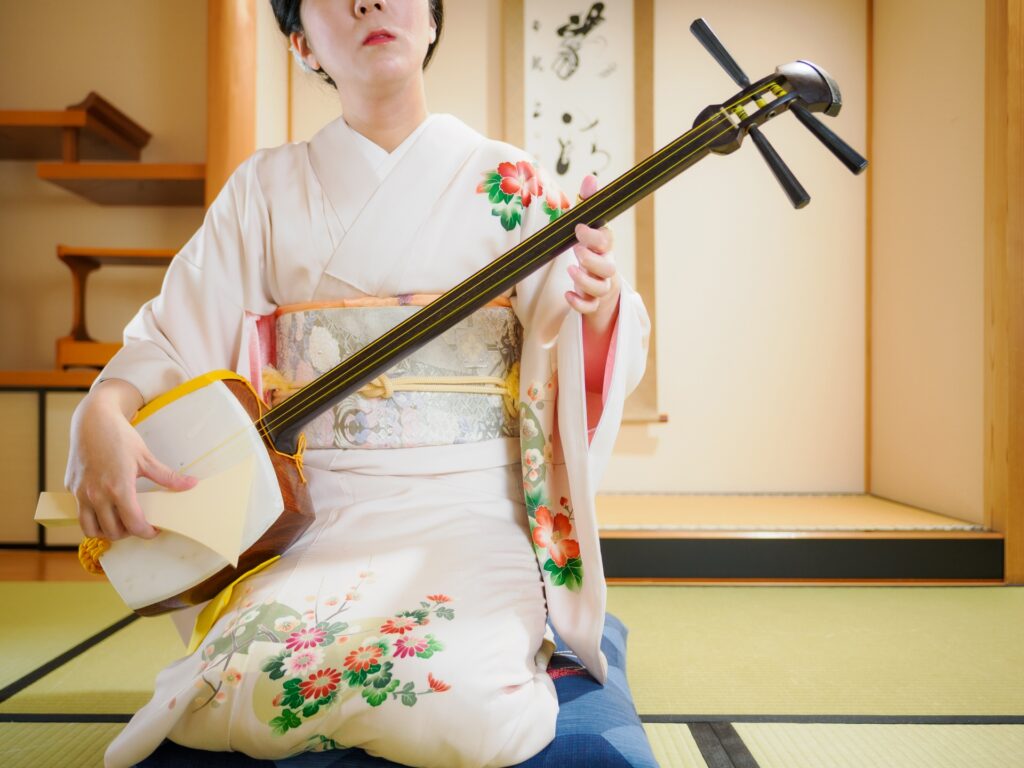
Historically, the Shamisen was the heartbeat of the Edo period’s “Floating World.” It was the soundtrack to the teahouses of Kyoto and the rowdy theaters of Tokyo. It is an incredibly versatile chameleon: in the hands of a Tsugaru master, it becomes a frantic, snowy tempest of improvisational shredding; in the hands of a Geisha, it becomes a delicate, whispered confession of longing. The instrument possesses a unique ability to mimic the human voice—its sighs, its laughter, and its sharp intakes of breath—making it less of an accompaniment and more of a conversational partner.
The Resonance of Silence
Perhaps the most striking aspect of a Shamisen performance is the Ma—the space between the notes. In the Japanese musical tradition, silence is not an absence of sound, but a heightened state of anticipation. When a performer strikes a single, bone-chilling note and allows it to decay into the stillness of the room, they are sculpting the air itself. To listen to the Shamisen is to learn the art of listening to the void. It is a reminder that in the gaps between our busy thoughts, there is a profound resonance waiting to be heard, if only we have the courage to strike the string.