The Gliding Sanctuary
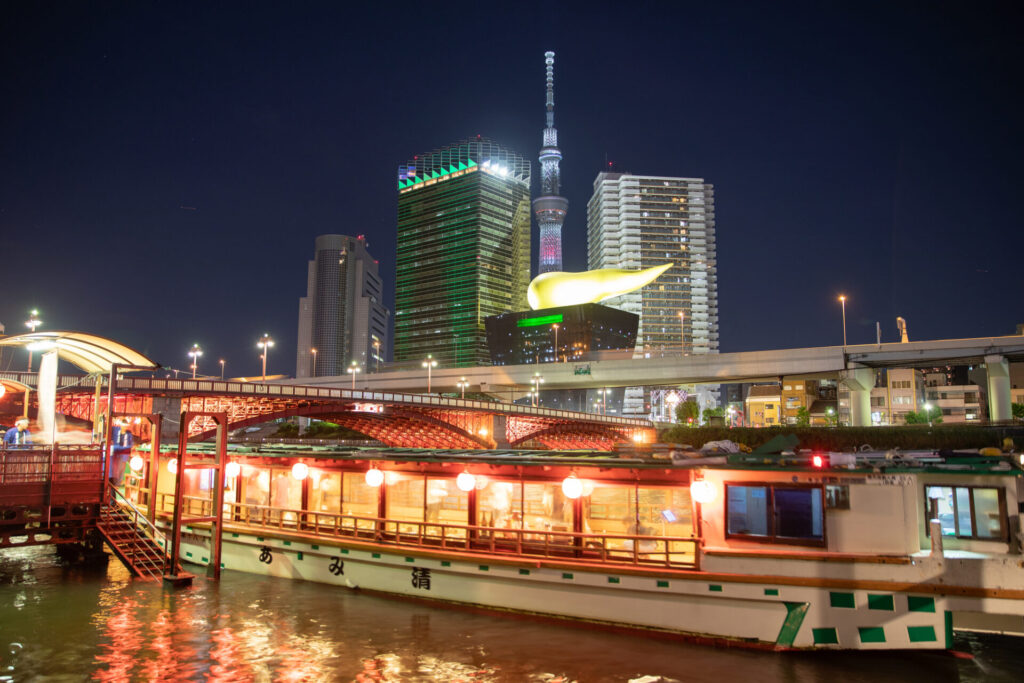
As the sun dips below the horizon, casting the steel and glass of the city into deep silhouettes, a different kind of light begins to shimmer on the water. These are the Yakatabune—traditional, low-slung wooden boats adorned with glowing paper lanterns. To step onto a Yakatabune is to leave the relentless pace of the asphalt behind and surrender to the rhythmic, ancient pull of the tide. It is a transition from the vertical world of skyscrapers to the horizontal world of the river, where time is measured not by seconds, but by the gentle slap of waves against the hull.
The Architecture of Intimacy
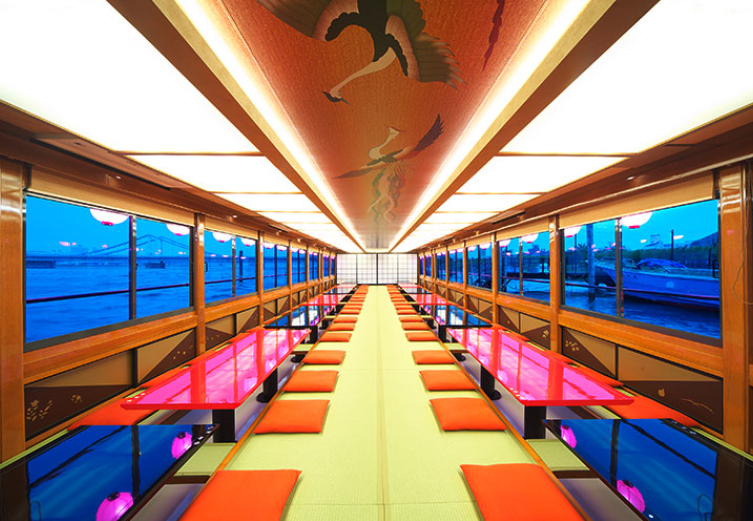
Inside, the Yakatabune reveals its true nature: a floating washitsu, or traditional Japanese room. Beneath the low ceilings, guests gather on tatami mats at low tables, creating an immediate sense of communal intimacy. This is the “mobile architecture” of the Edo period, designed to bring the refined comforts of a high-end teahouse directly into the heart of the elements. In this wooden cocoon, the barriers between people begin to dissolve. As the boat drifts, the city outside becomes a silent movie, a distant neon landscape that feels worlds away from the warmth and laughter contained within the cabin.
A Feast of Seasons and Steam
The sensory centerpiece of the journey is the cuisine, specifically the art of Edomae Tempura. There is a profound elegance in watching a chef fry delicate morsels of seafood and vegetables in a small galley as the boat sways. The hiss of the oil mingles with the sound of the river, and the resulting dish—light, crisp, and piping hot—is a testament to the Japanese mastery of freshness. To eat tempura on the water is to engage in a multisensory ritual, where the coolness of the night air serves as the perfect seasoning for the warmth of the meal.
Chasing the Evanescent Moment
Historically, the Yakatabune was the ultimate stage for Yugyo—the pursuit of refined pleasure. Aristocrats and wealthy merchants once used these vessels to view cherry blossoms in the spring or the moon in the autumn, practicing the art of appreciating transience. Today, that spirit lives on. To look out from the observation deck at the reflections of the Rainbow Bridge or the Tokyo Skytree is to witness the marriage of the ancient and the futuristic. The Yakatabune reminds the modern soul that even in a city that never sleeps, one can always find a pocket of stillness, drifting slowly between the past and the present.