
A Canvas in Motion
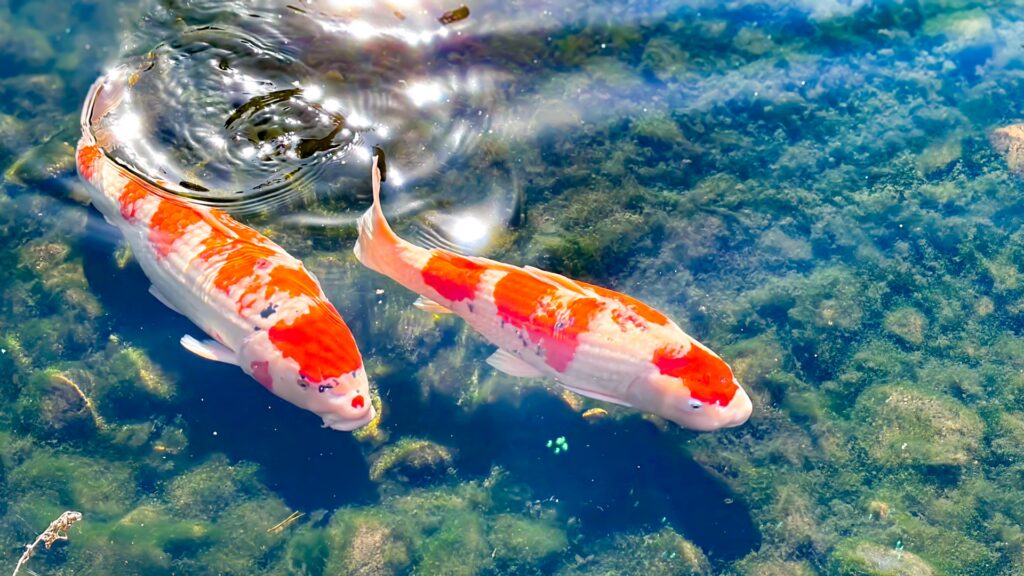
In the still, mirrored surface of a temple pond, a flash of crimson and gold breaks the reflection of the surrounding maples. This is the Nishikigoi—the “brocaded” carp. To the casual observer, they are ornamental fish, but to the Japanese heart, they are swimming canvases. Unlike the static beauty of a painting hung on a wall, the Koi represents a masterpiece in constant flux. Each movement of its powerful fins rearranges the colors of the water, embodying the philosophical ideal that beauty is never fixed, but a continuous, flowing evolution.
The Architecture of Endurance
The Koi is far more than an aesthetic object; it is a profound symbol of Nintai, or perseverance. According to ancient legend, a carp that successfully swims upstream and leaps over the “Dragon Gate” waterfall is transformed into a celestial dragon. This myth elevates the fish from a creature of the mud to a spiritual warrior. In a culture that prizes resilience in the face of adversity, the Koi serves as a silent teacher. It navigates the currents with a calm, unhurried strength, reminding the watcher that true power lies in the ability to remain composed amidst the shifting tides of life.
The Geometry of the Pond
A Koi pond is not merely a habitat; it is a carefully curated universe. The placement of stones, the overhang of moss-covered rocks, and the depth of the water are all designed to highlight the fish’s vibrant patterns. This relationship between the environment and the inhabitant reflects the Shinto and Buddhist belief in the interconnectedness of all things. The Koi does not exist in isolation; it is the focal point of a landscape designed to induce Ma—the intentional pause. As one watches the slow, deliberate circles of a Kohaku or a Sanke, the frantic pace of the modern world begins to fall away, replaced by the meditative rhythm of the water.
Living Longevity
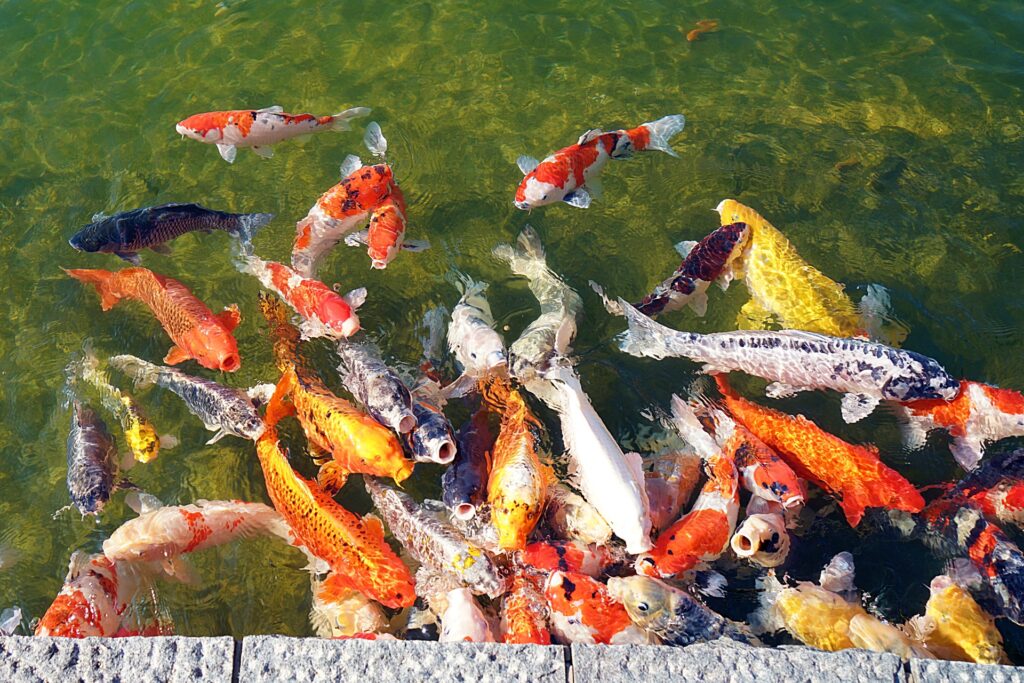
There is a unique temporal quality to the Koi that resonates with the Japanese concept of lineage. These fish can live for decades, and in rare cases, over a century, outlasting the humans who tend to them. They become living heirlooms, passed down from one generation to the next, carrying the memories of a family within their scales. To keep a Koi is to enter into a contract with time itself. It is an exercise in slow-living, a commitment to nurturing something that will continue to drift gracefully through the water long after the hands that fed it are gone.