
A journey into Awa Indigo, where master craftsmen use sake, ash, and microorganisms to brew the ultimate color.
When you hear the word “indigo,” you likely think of your favorite pair of blue jeans. But the blue of Awa Ai (Awa Indigo) from Tokushima, Japan, is something entirely different.
While most modern clothing is colored with petroleum-derived synthetic dyes, traditional Japanese indigo isn’t just “made”—it is “brewed.” It is a “Living Blue” powered by the invisible strength of microorganisms.
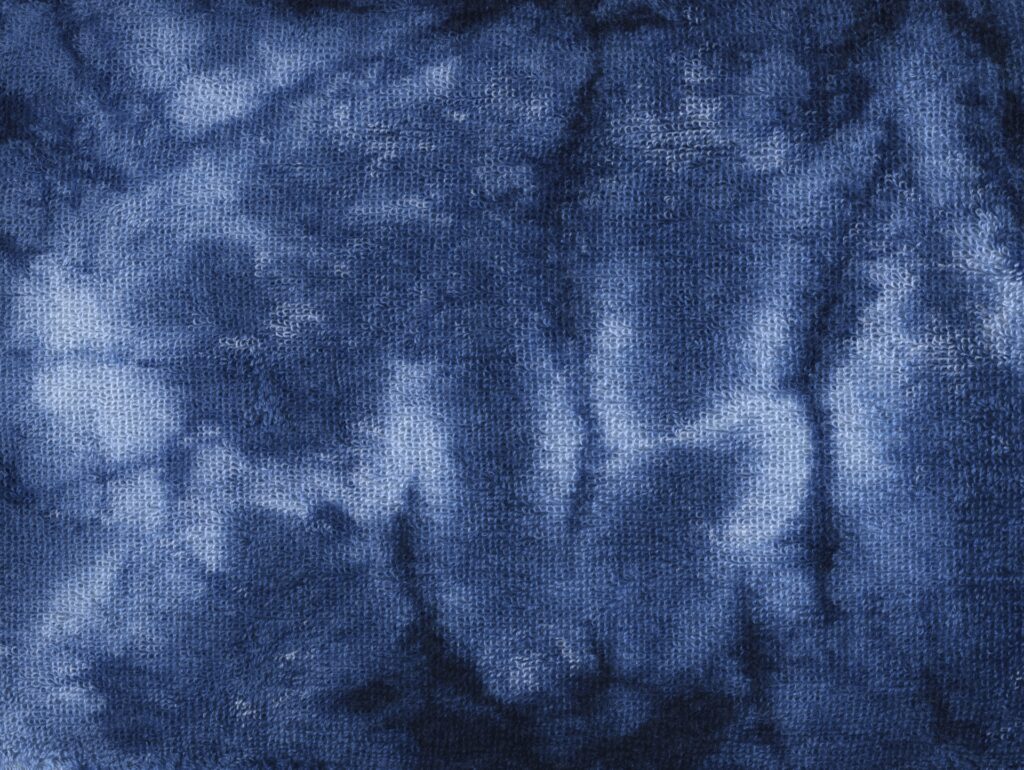
Sukumo: A 100-Day Soul-Building Process
The journey of Awa Indigo begins with the harvest of the indigo plant, but the leaves cannot dye fabric in their raw state. They must first undergo a grueling transformation called Sukumo.
For 100 days, master craftsmen pile the dried leaves and sprinkle them with water, turning them repeatedly. This triggers a natural fermentation process. Even in the dead of winter, the indigo “bed” reaches temperatures of 60–70°C (140–158°F), releasing clouds of steam. It looks less like a factory and more like a living creature breathing in the dark.
Ai-date: A Dialogue with Microbes
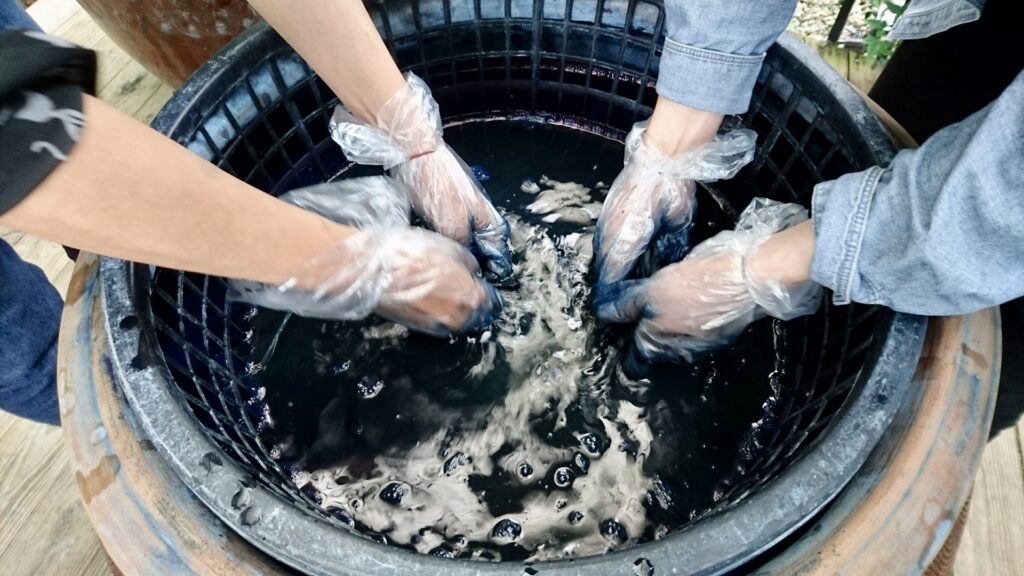
Once the Sukumo is ready, the second stage of fermentation, Ai-date (waking the blue), begins. The indigo is placed in vats with wood ash lye.
To keep the bacteria healthy and active, craftsmen feed them natural “nutrients” such as Japanese sake and wheat bran. When you look into an indigo vat, you might see a layer of iridescent bubbles on the surface. This is called the Ai-no-hana (Indigo Flower). Its appearance is a sign that the microbes are thriving. Every morning, the craftsman tastes and smells the liquid, checking the “mood” of the bacteria before deciding if the vat is ready to dye. It is a silent, profound dialogue between human and microbe.
Beauty That Breathes
Why do we continue this labor-intensive process in an age of instant chemicals? The answer lies in the “Life Force” retained in the fabric. Because it is fermented, Awa Indigo offers benefits that synthetic dyes cannot replicate:
・Skin-Kindness: It is gentle enough for babies and those with sensitive skin, as it contains no harsh fixatives.
・Natural Protection: Historically, Samurai wore indigo under their armor for its antibacterial and skin-healing properties.
・Eco-Friendly Longevity: Unlike synthetic dyes that fade and dull, fermented indigo ages gracefully, becoming more vivid and “clear” over years of use.
Wearing Mindfulness
To own a piece of Awa Indigo is to wear a fragment of the Earth’s natural cycle. It is a reminder that the most beautiful things in the world aren’t manufactured—they are grown and nurtured.
Next time you see a deep shade of blue, take a moment to wonder: Is it just a color, or is it alive?