
In the quiet corners of Japanese studies and bustling local markets alike, one figure stands out with an unmistakable intensity: the Daruma. Round, hollow, and typically a vibrant crimson, these papery figures are far more than mere decorations. They are physical manifestations of a centuries-old philosophy—a silent partner in the human pursuit of ambition and the gritty reality of falling down and getting back up.
The Monk Who Forgot How to Move
The Daruma is modeled after Bodhidharma, the 5th-century monk credited with bringing Zen Buddhism to China and eventually Japan. Legend tells of his nine-year meditation facing a cave wall in silence. It is said that through nearly a decade of immobility, his arms and legs eventually withered away, giving the doll its characteristic limbless, roly-poly shape. This origin story serves as a stark reminder that true spiritual or personal breakthroughs often require a sacrifice of comfort and an iron-clad stillness of the mind.
The Physics of Persistence: Nana Korobi Yaoki
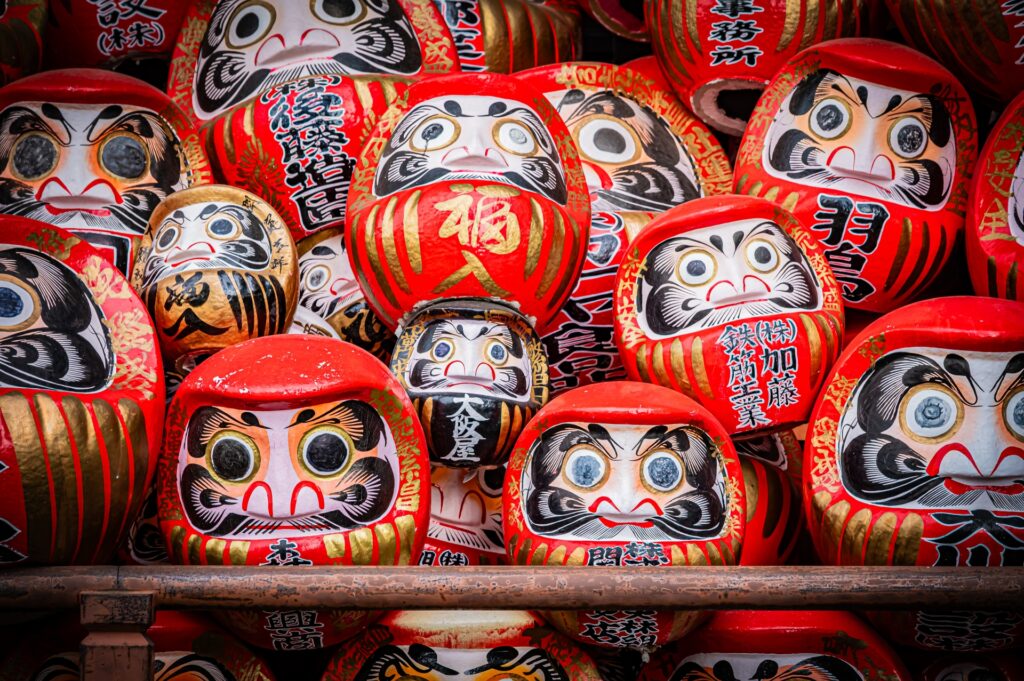
There is a beloved Japanese proverb, Nana korobi yaoki—”Fall seven times, stand up eight.” The Daruma is the literal embodiment of this phrase. Because of its weighted bottom, the doll will always return to an upright position, no matter how many times it is tipped over. For the observer, this is a powerful metaphor for the resilience required to navigate life. It suggests that failure is not a permanent state, but rather a momentary tilt before the inevitable return to one’s feet.
The Ritual of the Empty Eye
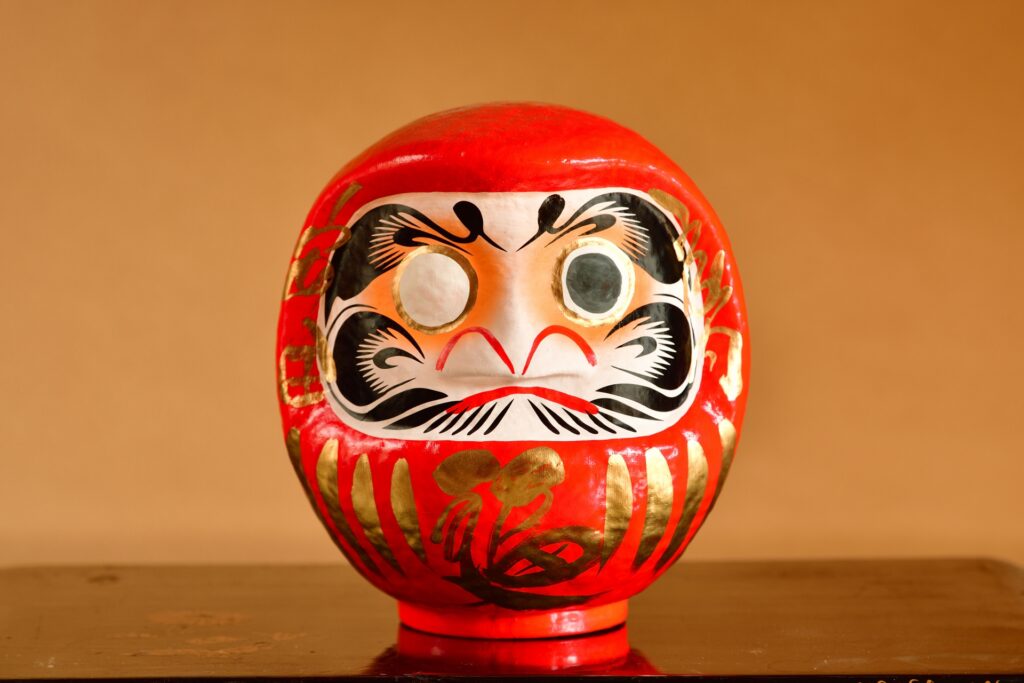
When one purchases a Daruma, both eyes are blank circles of white. The ritual begins by painting in the left eye (the doll’s right) while making a specific resolution or wish. This act creates a “half-blind” figure that stares back at the owner every day, serving as a persistent, slightly jarring reminder of an unfulfilled promise. Only when the goal is achieved—be it a business milestone, a health journey, or a creative project—is the second eye painted in. This completion marks the moment of clarity, where the internal vision has finally manifested in the external world.
The Final Fire: The Cycle of Letting Go
Daruma are not meant to be kept forever. At the end of the year, usually during the New Year festivities, people return their completed dolls to temples for a ritual burning called Daruma Kuyo. This final act is a celebration of the goal reached, but also a lesson in non-attachment. It clears the space for new ambitions, reminding us that life is a continuous cycle of setting intentions, striving, and eventually letting go to begin again.