A Realm Defined by Devotion
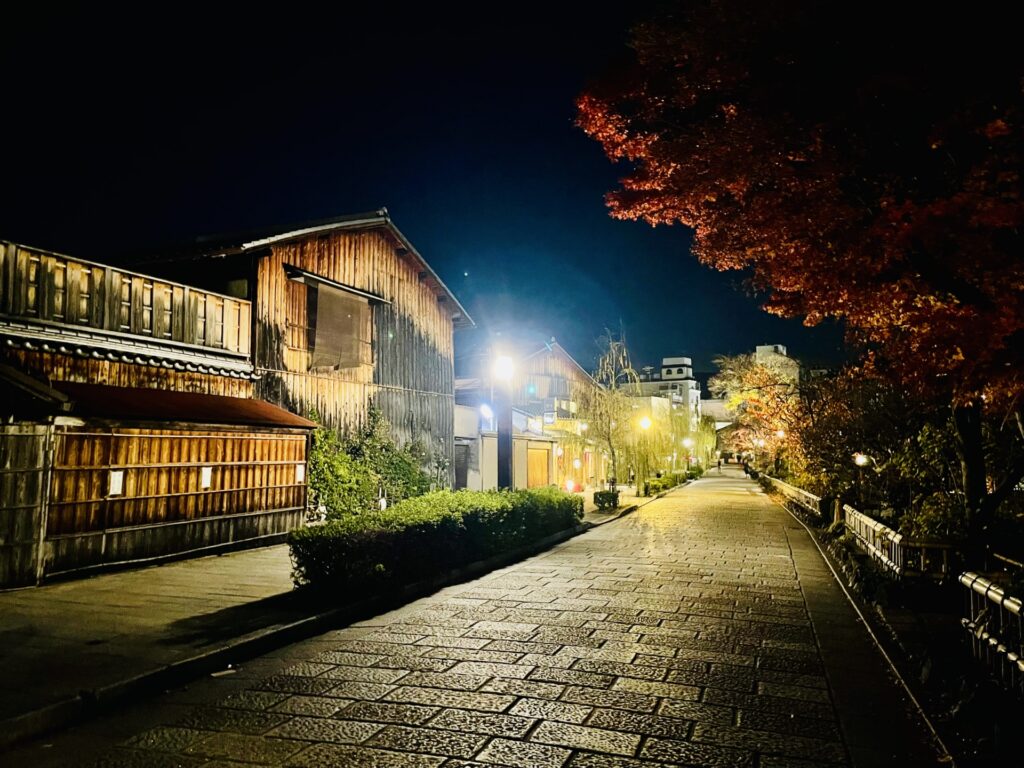
The stone-paved streets of Gion do not merely represent a relic of the past; they are a living, breathing testament to Japanese spiritual and artistic discipline. Originally developed as a “monzen-cho” (a town in front of a gate) to welcome pilgrims to Yasaka Shrine, Gion has always been a place where the sacred and the social intersect. The low-slung, wooden machiya houses with their delicate lattice windows (koushi) are not just architectural marvels; they are family homes and active businesses that have survived centuries of modernization.
The Art of the Invisible
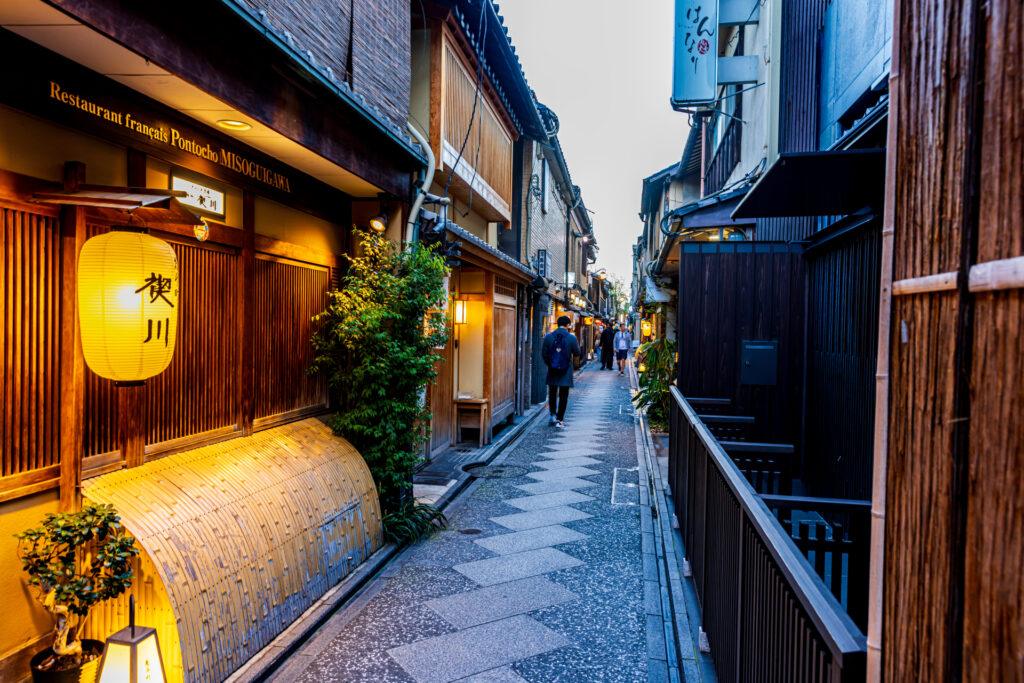
In Gion, the true essence of culture is often hidden from the naked eye. While many visitors hope for a fleeting glimpse of a Maiko or Geiko (as Geisha are known in Kyoto), the real magic happens behind the closed doors of the Ochaya (teahouses). Here, the principle of “Ichigen-san Kotowari” (no first-time visitors without an introduction) prevails. This is not about exclusion, but about preserving a space of absolute trust and refined hospitality (Omotenashi). The arts practiced here—tea ceremony, classical dance, and mastery of the shamisen—are disciplines that take a lifetime to perfect, far removed from the world of instant gratification.

Harmony in the Shadows
As evening falls and the lanterns along the Shirakawa Canal begin to glow, Gion reveals its most atmospheric side. The gentle sound of the river and the occasional click-clack of wooden geta sandals create a sensory bridge to the Edo period. For the global traveler, Gion offers a rare opportunity to practice “sustainable soul-searching.” By observing the quiet rules of the district—such as not touching the historic buildings or chasing those in kimono—one becomes part of the effort to protect this fragile beauty. Gion is not a stage for tourists; it is a sanctuary where history refuses to fade.