
More than just a source of flavor, Japan’s terraced tea fields offer a “Green Therapy” for the soul and a window into the nation’s rhythmic heart.
An Ocean of Stillness
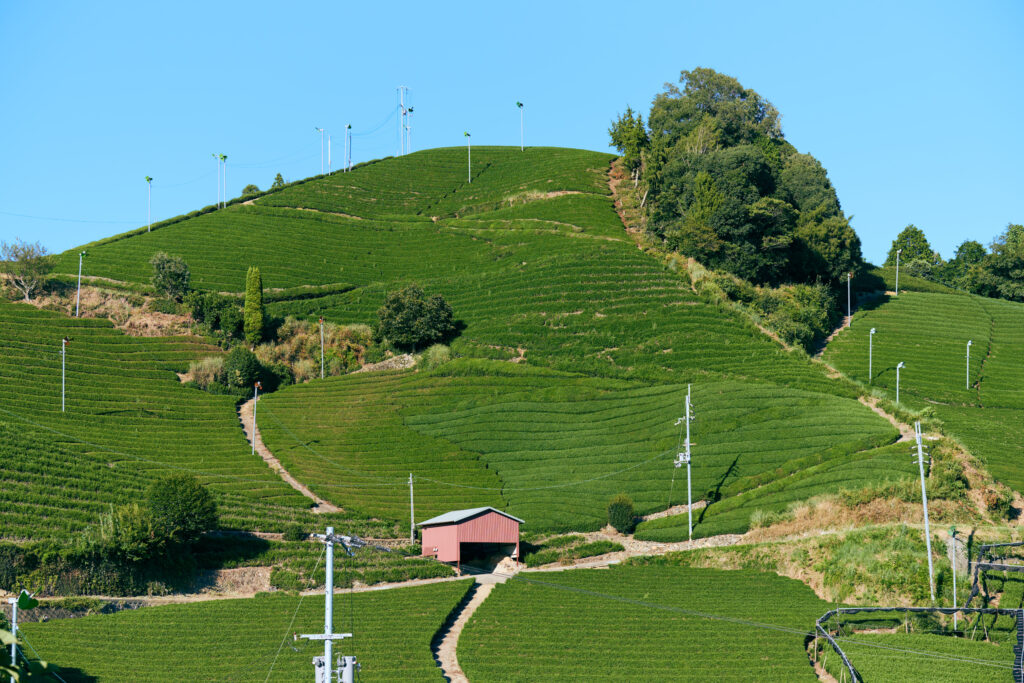
To travel through the Japanese countryside is to eventually encounter the striking sight of tea plantations. Unlike the wild meadows of the West, these fields are masterpieces of precision—manicured ridges that follow the natural curves of the mountains. This is where the concept of Green Therapy begins. The deep, consistent green of the tea bushes is scientifically known to lower cortisol levels, but beyond the chemistry, there is a profound sense of “Ma” (pure space) that allows visitors to reset their internal rhythm against the backdrop of an endless emerald ocean.
A Symphony of Four Seasons
The beauty of these landscapes is defined by the seasons. In spring, the fields glow with the arrival of Shincha (new tea), where the youngest sprouts turn the hillsides into a brilliant, translucent lime green. Summer brings a deep, robust jade that feels cooling under the humid sun. In autumn and winter, the fields take on a stoic character, sometimes dusted with frost or snow, standing in silent endurance. To witness these changes is to understand the Japanese appreciation for impermanence—the beauty of a moment that will never be exactly the same again.
The Harvest Experience
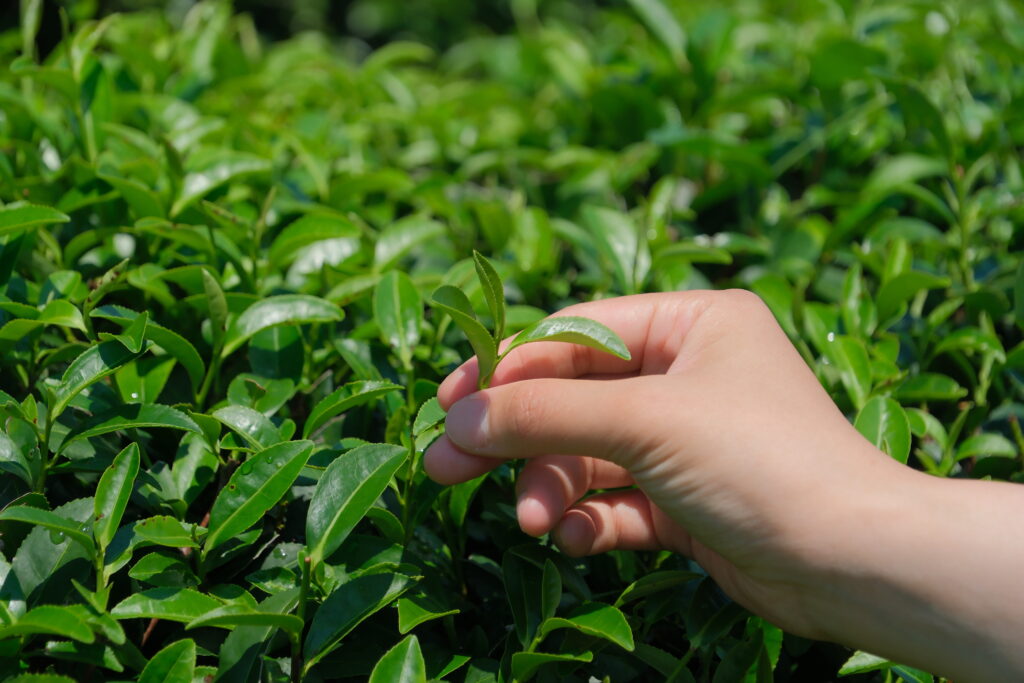
For those seeking to go deeper than a photograph, many regions offer the chance to step into the rows. Tea picking is a tactile meditation. Feeling the texture of a fresh leaf—supple, cool, and fragrant—connects the traveler to the land in a way a cup of tea in a city cafe never could. Whether it is wearing traditional picking attire or learning the precise art of the “hand-pluck,” these experiences transform a scenic view into a personal memory of labor and gratitude.
The Spirit in the Rows
There is a reason why the tea field feels so spiritual. In Japan, the cultivation of tea is a reflection of the “Way of Tea” (Chado). The discipline required to maintain such perfect geometry in the face of harsh weather mirrors the Zen pursuit of perfection and mindfulness. When looking at a tea plantation, one isn’t just seeing agriculture; they are seeing the Japanese spirit of Omotenashi (hospitality) starting from the very soil. It is the belief that peace begins with the environment before it ever reaches the cup.