More Than a Shield: The Canvas of a Warrior
When one envisions a Samurai, the silhouette is unmistakable: the towering crest, the layered plates, and the fierce mask. However, to the Japanese warrior, the armor—or Katchu—was never merely a tool for survival. It was a wearable statement of philosophy, lineage, and artistic soul. In an era where death was a constant shadow, the armor served as a vibrant celebration of life and a display of the wearer’s indomitable will.
The Geometry of Protection: Steel and Silk
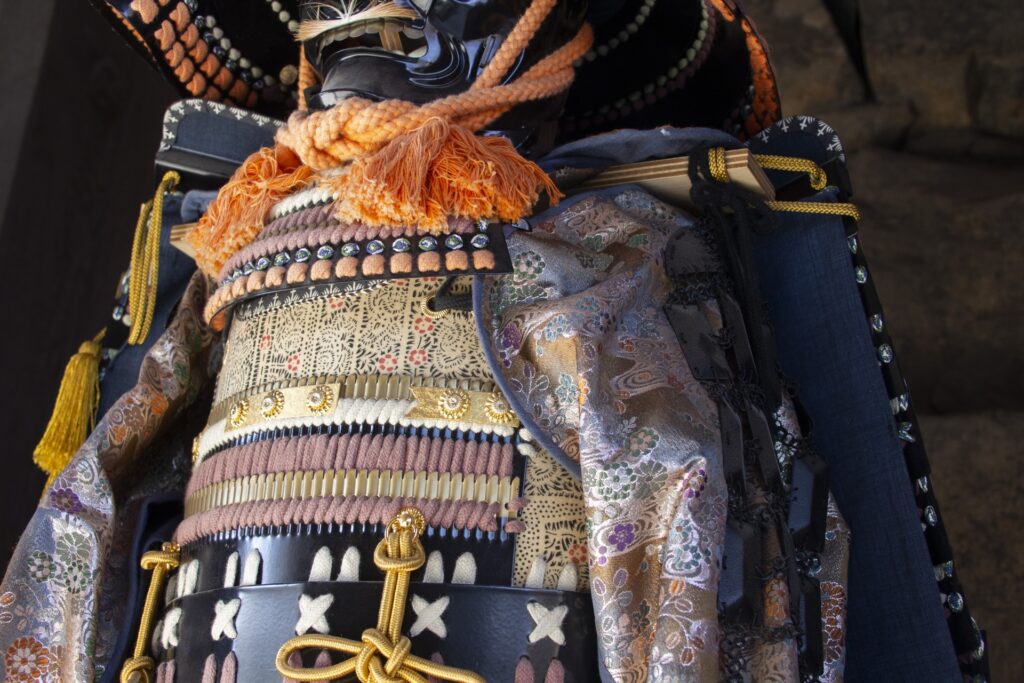
The construction of Katchu is a marvel of pre-industrial engineering. Unlike the heavy, rigid plate armor of European knights, Japanese armor was designed for mobility and climate. Thousands of small iron or leather scales, known as kozane, were lacquered to resist moisture and then bound together with intricate silk cords. This created a flexible “second skin” that could deflect a blade while allowing the Samurai to move with the fluid grace required for archery and swordsmanship. The color of the silk lacing (odoshi) wasn’t just decorative; it signaled the warrior’s clan and his sense of aesthetic refinement.
The Mask of Intimidation: Menpo and Kabuto
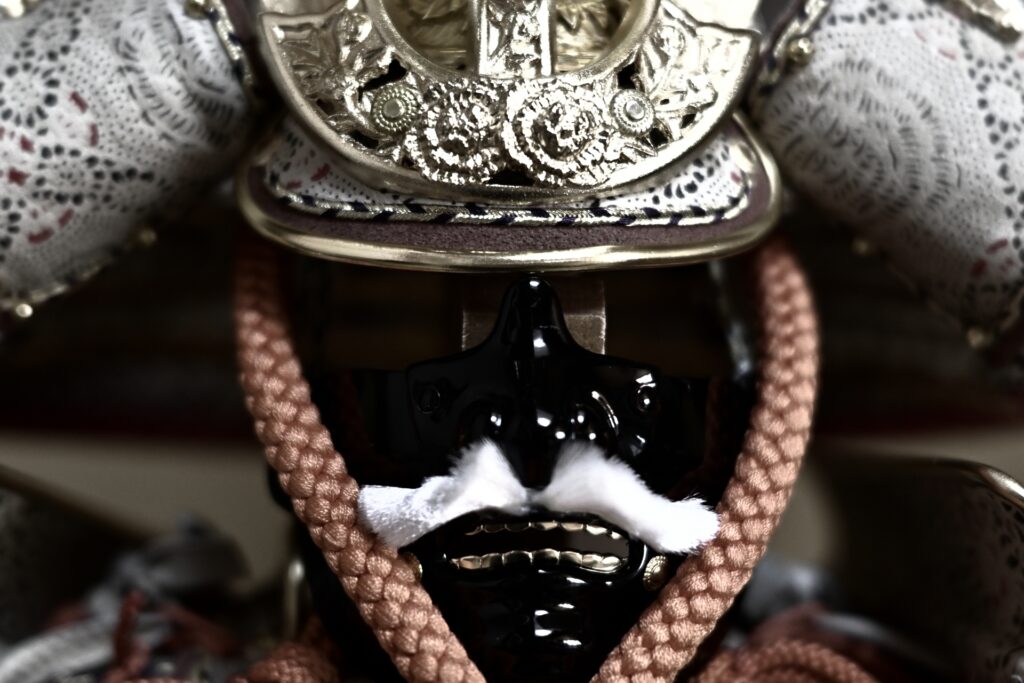
Perhaps the most captivating elements are the Kabuto (helmet) and the Menpo (face mask). The Kabuto often featured dramatic Maedate—crests shaped like dragon horns, crescent moons, or even fearsome deities—designed to make the warrior appear larger than life on the battlefield. Below the helmet, the Menpo transformed the human face into a static snarl of iron, often complete with bristling moustaches made of horsehair. This wasn’t just to protect the face; it was psychological warfare, meant to freeze an opponent with a single glance.
A Legacy Beyond the Battlefield
As the chaotic Sengoku period gave way to the peaceful Edo era, the Katchu evolved from functional combat gear into a symbol of prestige and ceremonial beauty. Today, these suits are no longer found on blood-stained fields but are preserved in museums and private collections as “Art of the Highest Order.” They remind us that for the Samurai, the way of the warrior was paved with equal parts steel and spirit—a legacy that continues to fascinate the world centuries later.