
Beyond the craft of Kintsugi lies a philosophy of resilience and the quiet beauty of Wabi-Sabi.
When a ceramic tea bowl slips from the hands and shatters upon the floor, the instinctive reaction is often a sense of loss—a feeling that something “perfect” has been irrevocably ruined. In many cultures, the broken pieces are swept away, discarded as fragments of a failed history. However, in Japan, there is a tradition that views this moment not as an end, but as a profound beginning. This is the art of Kintsugi (golden joinery).
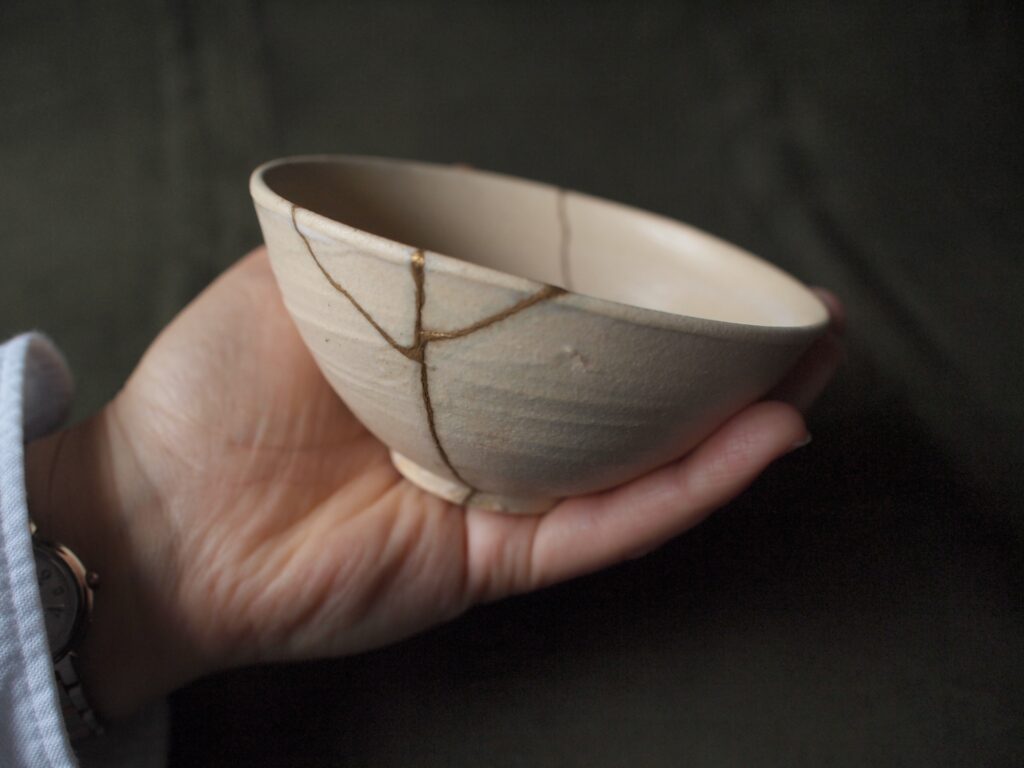
The Art of Visible Repair
Instead of hiding the fractures with invisible glue, the artisan highlights them with lacquer mixed with powdered gold, silver, or platinum. The result is a lattice of luminous veins that trace the history of the break. The object is not “fixed” to return to its original state; it is transformed into something stronger and more beautiful than it ever was before.
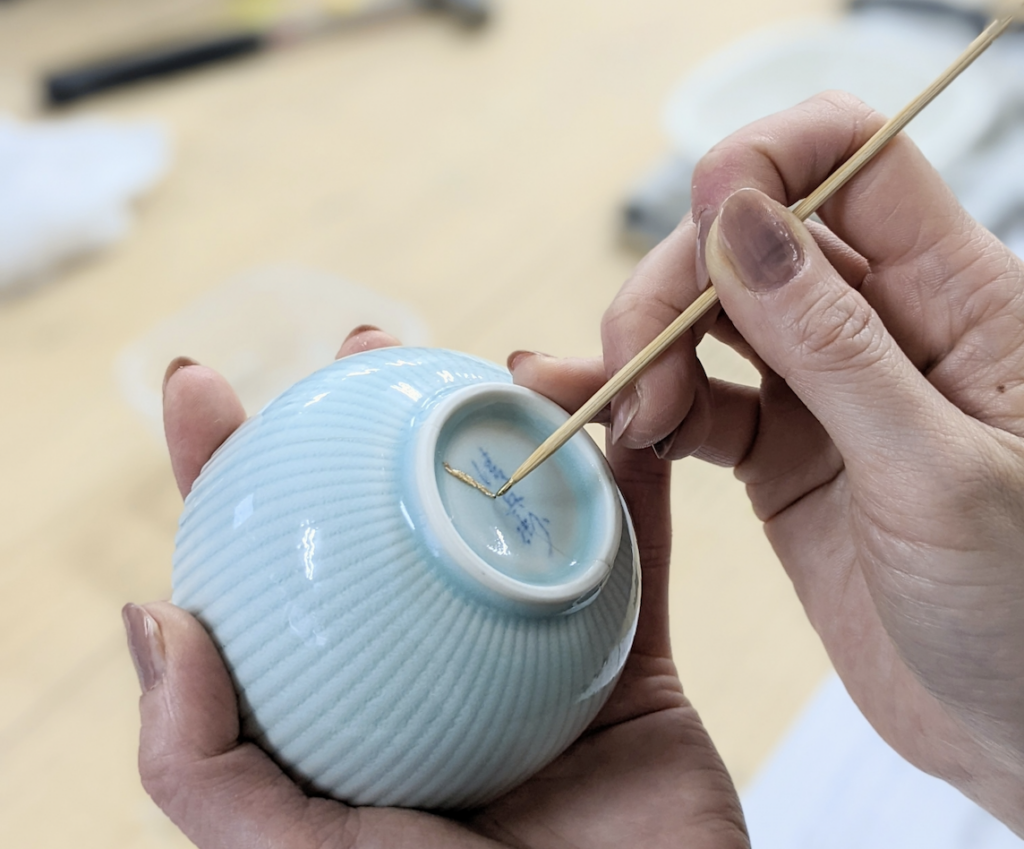
The Aesthetics of Impermanence
This practice is deeply rooted in the spirit of Wabi-Sabi—the Japanese aesthetic that finds beauty in the imperfect, the impermanent, and the incomplete. It suggests that there is a unique dignity in things that have endured hardship and wear. In this worldview, a crack is not a defect to be disguised, but an event to be honored.
A Metaphor for the Human Soul
The philosophy of Kintsugi extends far beyond the workbench, serving as a powerful metaphor for the human experience. In a world that often demands flawless perfection, Kintsugi reminds us that scars are not signs of weakness or shame. Rather, they are testaments to resilience. Just as the gold makes the vessel more valuable, the experiences of loss and healing add a layer of depth and character to the soul.
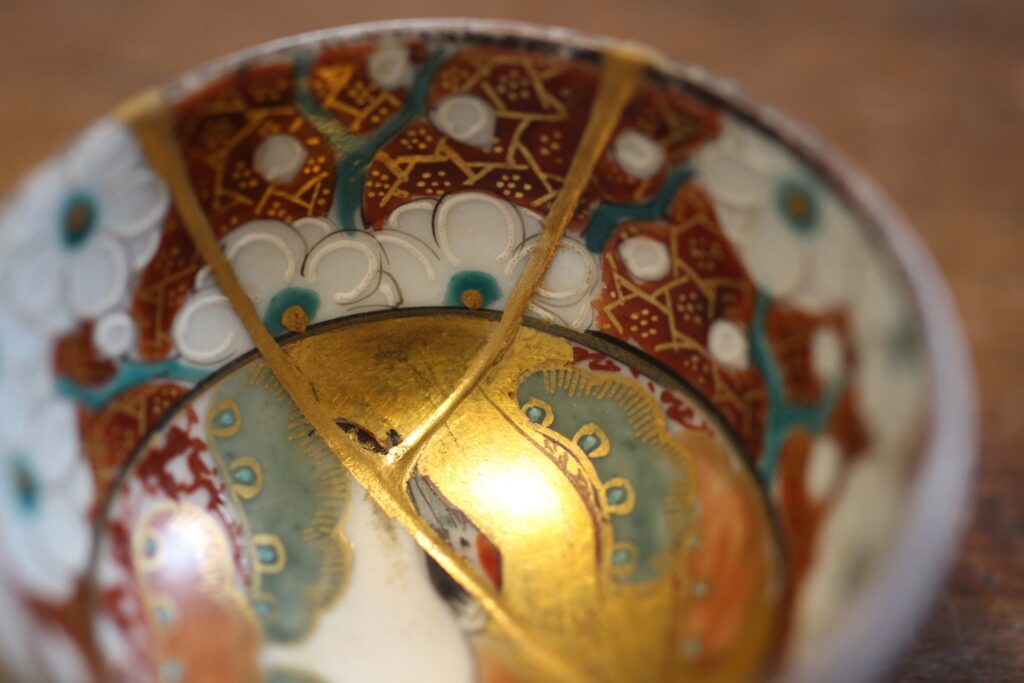
The Light Within the Cracks
To embrace the spirit of Kintsugi is to accept that nothing is truly permanent, and that beauty is often found in the very places where we have been broken. It is an invitation to wear one’s history with pride. It serves as a quiet realization that the “cracks” are precisely where the light—and the gold—shine through.