
Exploring the timeless alchemy of Urushi, where nature’s sap transforms into an eternal luster.
In the world of fine craftsmanship, few materials bridge the gap between the organic and the divine as seamlessly as Urushi (Japanese lacquer). While porcelain earned the moniker “china,” the exquisite lacquerware of the East became so synonymous with Japanese identity that, by the 17th century, the objects themselves were simply referred to as “japan.”
This is not merely a craft; it is a slow, meditative dialogue with nature.
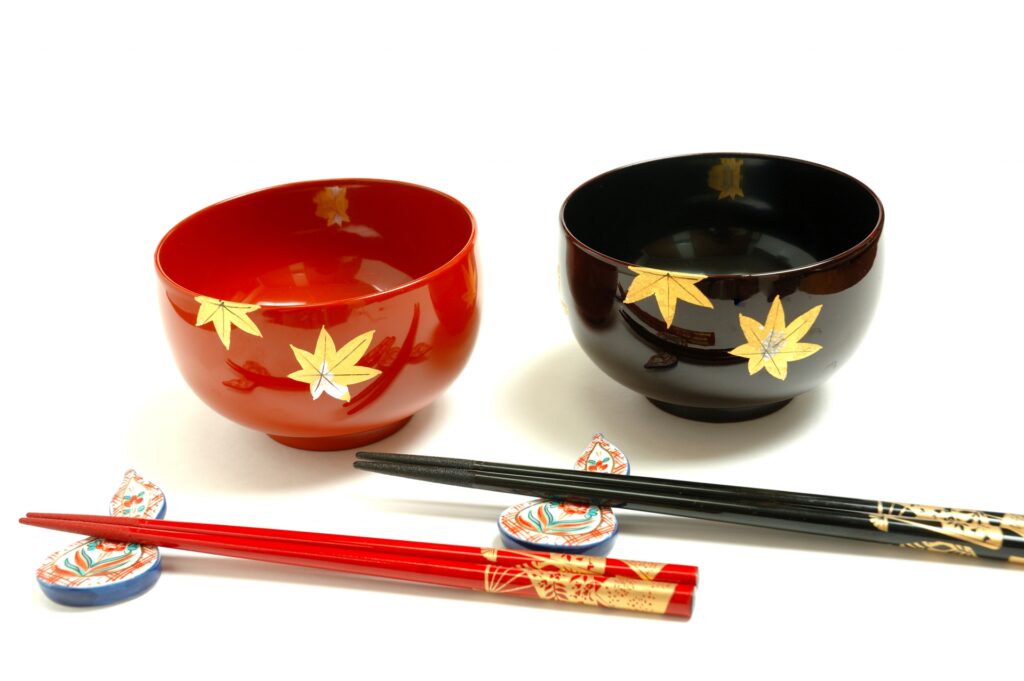
The Blood of the Tree
The journey begins with the sap of the Rhus verniciflua, or the lacquer tree. Harvested in minute quantities—often just a few spoonfuls from a single tree—this sap is a living substance. It does not “dry” in the traditional sense; rather, it cures by absorbing moisture from the air. In a poetic paradox, Urushi breathes in the dampness of the Japanese climate to reach its hardest, most durable state.
Aesthetics of Shadow and Light
As Junichiro Tanizaki famously noted in In Praise of Shadows, Japanese lacquerware is designed to be experienced in low light. Unlike the harsh glare of modern electricity, the deep luster of a black or vermilion bowl captures the flickering glow of candlelight, giving the soup within a sense of depth and mystery.
・Durability: Once cured, Urushi is resistant to acids, alkalis, and high heat.
・Tactility: Unlike the cold touch of ceramic, lacquerware feels soft and warm to the skin, mirroring the temperature of the human hand.
・The Art of Imperfection: Through the technique of Kintsugi, broken lacquerware is mended with gold, celebrating the object’s history rather than hiding its flaws.
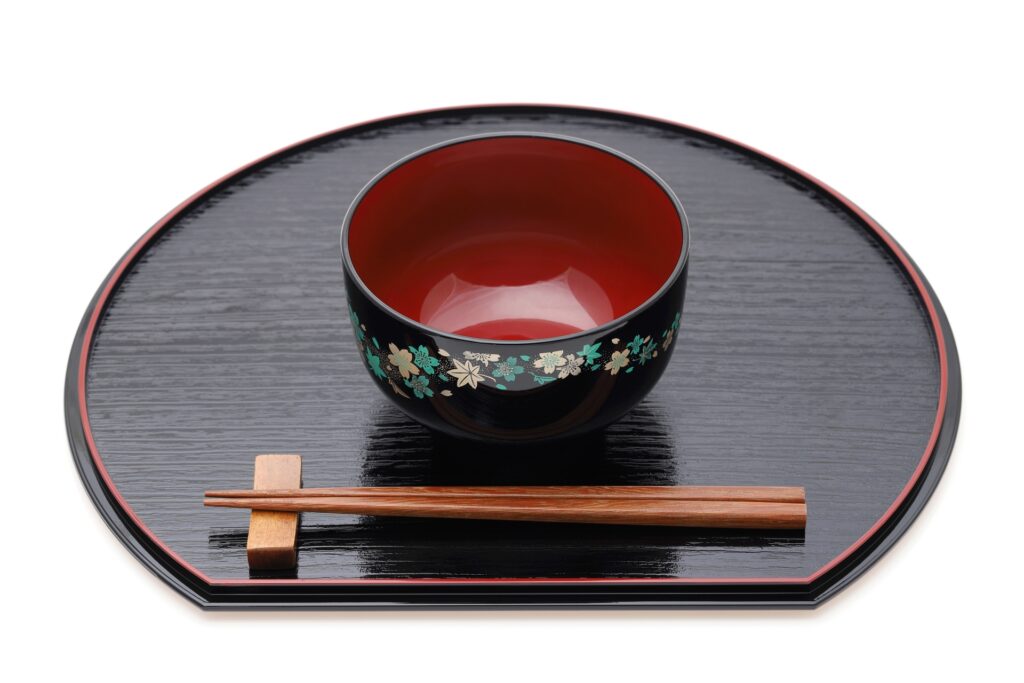
A Sustainable Legacy
In an era of disposable goods, Urushi stands as a testament to longevity. A high-quality piece of lacquerware is not meant for a single lifetime; it is intended to be passed down, its luster deepening with every decade of use. To hold a piece of “japan” is to hold a fragment of the earth, refined by human patience into a mirror of the soul.